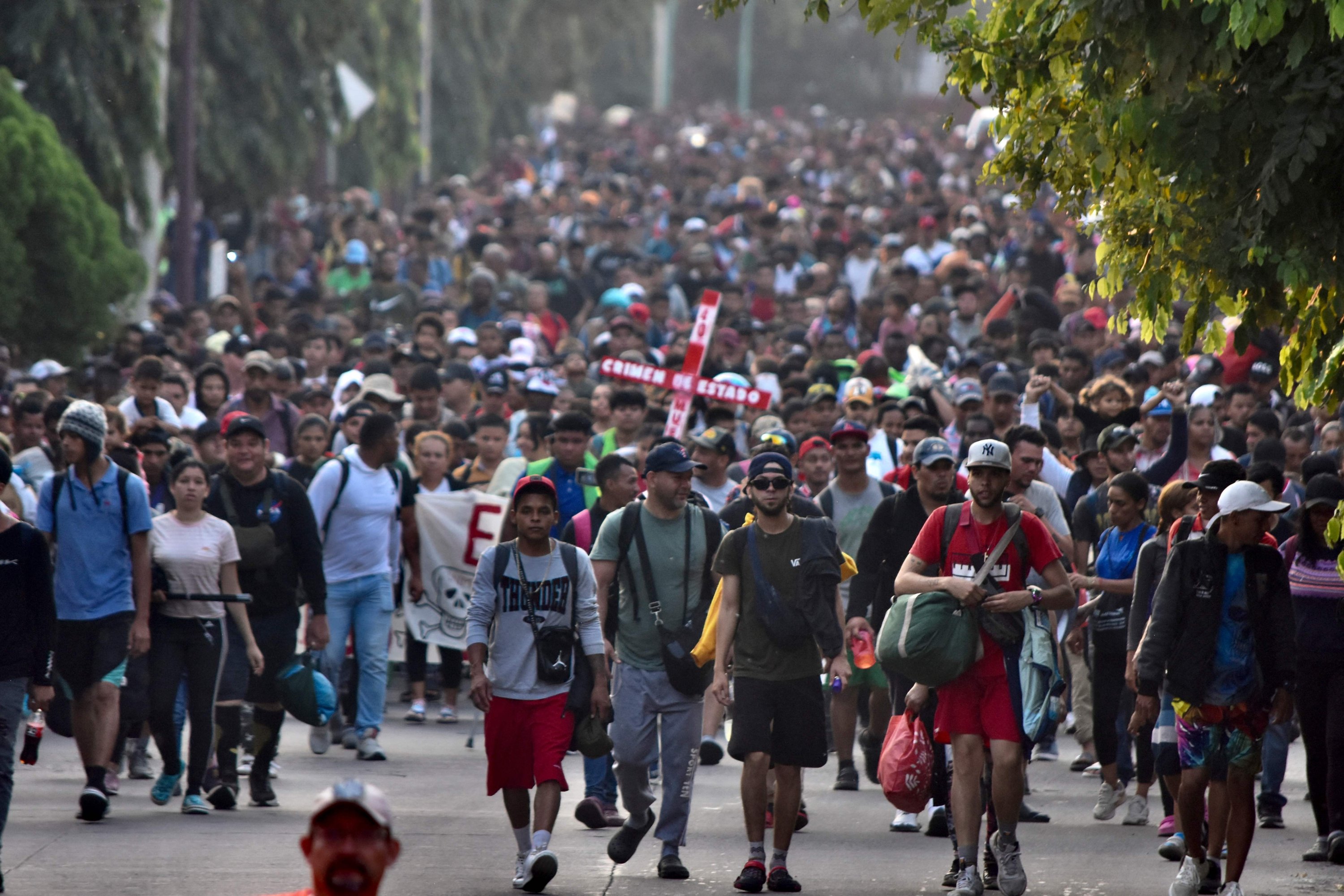
The World Bank called on developed countries to look for enhanced management of migration as their economies are expected to become increasingly dependent on it due to rapid aging.
The bank's latest World Development Report said that about 184 million people across the world now live in countries where they lack citizenship, 43% in low and middle-income countries. About 37 million of the total are refugees, a number that has tripled over the last decade.
Some countries face rapid declines of working-age adult populations, including Spain, where it is projected to shrink by more than a third by 2100, with those above age 65 increasing to nearly 40% of the population from 20% currently, the development lender said.
Countries including Mexico, Thailand, Tunisia and Türkiye may also soon need more foreign workers because their populations are no longer growing, while cross-border migration movements are already becoming more complex, with destination and origin countries spanning all income levels, according to the report.
"Migration can be a powerful force for prosperity and development," World Bank Senior Managing Director Axel van Trotsenburg said in a statement. "When managed properly, it provides benefits for all people – in origin and destination societies."
The report presents recommendations for policy-makers, chiefly to better match migrants' skills with needs in destination countries, while protecting refugees and reducing the need for distressed movements.
Gains are larger for both destination countries and migrants when their skills match well with the demands in destination countries. When the skills match is weak, the costs of hosting refugees should be shared multilaterally, it said.
More difficult policy challenges arise when the skills match is weak and migrants are not refugees, often leading to deportation and putting pressure on transit countries. The report said stronger international development efforts were needed in the origin countries to reduce the need for migration prompted by economic distress.
The World Bank said origin countries should make labor migration an explicit part of their development strategy and work to lower the cost of remittances to families back home, facilitate knowledge transfers from their diasporas abroad, and build skills that are in demand globally.
The bank said destination countries should encourage migration from populations where their skills are in high demand, adding that new financing instruments be developed multilaterally to help countries care for non-citizens in a predictable manner.