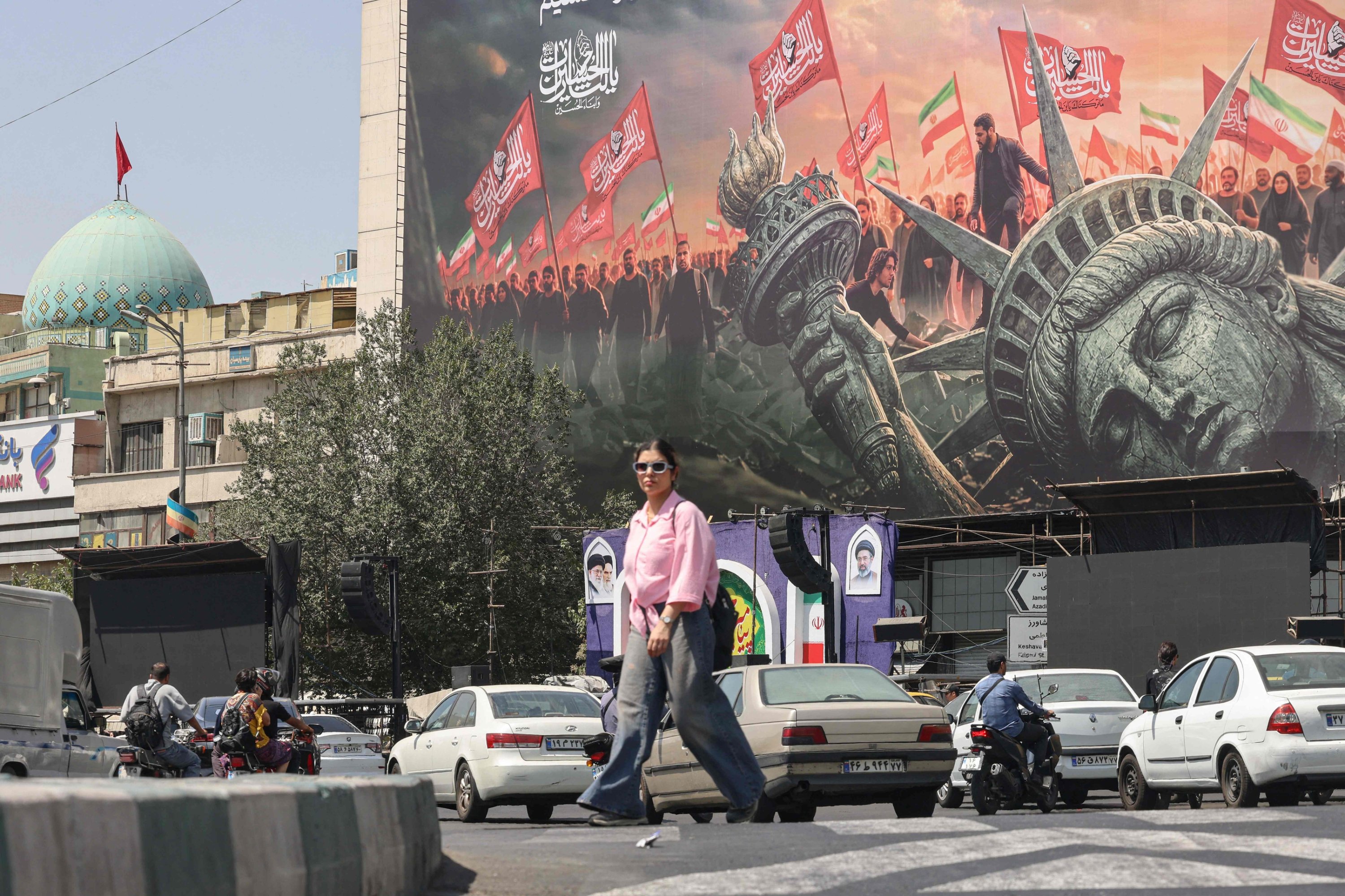
Iran carried out fresh attacks on U.S. military bases in Kuwait Thursday, defying President Donald Trump's threat of further strikes as tensions flared again six months into the war.
The new clashes, which began with U.S. raids Sunday, deepen the ongoing impasse in the war, as Tehran maintains a stranglehold on the strategic Strait of Hormuz and the U.S. presses its maritime blockade of Iran's ports.
Trump said his military was prepared to attack Iran "any time we want" after extensive U.S. bombardment of sites across the country left at least 19 Iranians dead between Tuesday and Wednesday.
Tehran has once again retaliated with strikes across the Middle East this week, saying it targeted U.S. bases and forces in the Gulf countries.
Iran's security chief Mohsen Rezaei warned the United States Wednesday that Iran had adopted a "new strategy" in the war that "will shatter your foundations."
Iran's pummeling of US military targets across the region came after a U.S. attack that hit a wedding in the country's south, prompting fury from Tehran.
The Iranian Red Crescent said shrapnel from the missile attack in the coastal town of Kuhestak killed four people, including a child, and wounded more than 50.
The U.S. military did not address the attack directly.
U.S. Central Command (CENTCOM) spokesperson Tim Hawkins said "the U.S. military never targets civilians, unlike the IRGC," referring to Iran's Revolutionary Guards.
Kuwait's army Thursday said it was intercepting a missile and drone attack from Iran, with the Iranian army saying it hit "the Ahmad al-Jaber Air Base in Kuwait with missiles and drones."
Iran's army also said it struck al Minhad Air Base in the United Arab Emirates, but the Gulf country reported no such attack.
Kuwait called the attacks "a direct threat to its security and stability, and the safety of its citizens and residents on its territory, and a grave breach of the rules of international law."
Meanwhile, Iran's First Vice President Mohammad Reza Aref said Thursday that Tehran's response to any future U.S. attack will be "asymmetric" and "multi-layered" as the recent attacks had changed their security calculations and defense doctrine.
"The recent U.S. crimes against the Iranian nation have changed our security calculations and defense doctrine. From now on, our response will be asymmetric, multi-layered and aimed at depriving the aggressor of security," Aref said on X.
He also warned of economic consequences for Washington.
"The Americans should think about stockpiling gasoline and fuel; dark months await the American economy," he said.
Aref did not elaborate on what measures Tehran could take in response to a future U.S. attack or how they could affect U.S. fuel supplies and the broader economy.
Washington has already vowed to choke Iran's economy, threatening to slap sanctions on its trade partners.
Energy Secretary Chris Wright pledged Wednesday that a U.S. plan for expanded sanctions targeting the Islamic republic's economic partners would deliver "absolutely maximum pressure."
Trump also suggested Wednesday renaming the Strait of Hormuz, a strategic shipping lane that Tehran has effectively shut for six months, as "Trump Strait" – although he implied later that he wasn't serious.
"Now that we have it under U.S.A. control, should we change the name Hormuz Strait to TRUMP STRAIT???" the U.S. president wrote on Truth Social.
Iran's pummeling of U.S. military targets across the region came after a U.S. attack that hit a wedding in the country's south, prompting fury from Tehran.
The Iranian Red Crescent said shrapnel from the missile attack in the coastal town of Kuhestak killed four people, including a child, and wounded more than 50.
The U.S. military did not address the attack directly.
U.S. Central Command (CENTCOM) spokesman Tim Hawkins said "the U.S. military never targets civilians, unlike the IRGC," referring to Iran's Revolutionary Guards.
The war erupted on Feb. 28 with U.S.-Israeli attacks on Iran that killed its then-Supreme Leader Ayatollah Ali Khamenei.
A fragile cease-fire collapsed after attacks on commercial ships in the Strait of Hormuz, through which one-fifth of world oil supplies previously flowed.
Israel's defense minister said meanwhile that his country was prepared to respond "with great force" if attacked by Iran over the Jewish high holiday season, which begins in mid-September.
"For now, they are striking throughout the region except us," Israel Katz told a conference hosted by Israeli media outlets.