Daily Sabah logo

Politics
Diplomacy Legislation War On Terror EU Affairs Elections News Analysis
TÜRKİYE
Istanbul Education Investigations Minorities Expat Corner Diaspora
World
Mid-East Europe Americas Asia Pacific Africa Syrian Crisis Islamophobia
Business
Automotive Economy Energy Finance Tourism Tech Defense Transportation News Analysis
Lifestyle
Health Environment Travel Food Fashion Science Religion History Feature Expat Corner
Arts
Cinema Music Events Portrait Reviews Performing Arts
Sports
Football Basketball Motorsports Tennis
Opinion
Columns Op-Ed Reader's Corner Editorial
PHOTO GALLERY
JOBS ABOUT US RSS PRIVACY CONTACT US
© Turkuvaz Haberleşme ve Yayıncılık 2025

Daily Sabah - Latest & Breaking News from Turkey | Istanbul

  • Politics
    • Diplomacy
    • Legislation
    • War On Terror
    • EU Affairs
    • Elections
    • News Analysis
  • TÜRKİYE
    • Istanbul
    • Education
    • Investigations
    • Minorities
    • Expat Corner
    • Diaspora
  • World
    • Mid-East
    • Europe
    • Americas
    • Asia Pacific
    • Africa
    • Syrian Crisis
    • Islamophobia
  • Business
    • Automotive
    • Economy
    • Energy
    • Finance
    • Tourism
    • Tech
    • Defense
    • Transportation
    • News Analysis
  • Lifestyle
    • Health
    • Environment
    • Travel
    • Food
    • Fashion
    • Science
    • Religion
    • History
    • Feature
    • Expat Corner
  • Arts
    • Cinema
    • Music
    • Events
    • Portrait
    • Reviews
    • Performing Arts
  • Sports
    • Football
    • Basketball
    • Motorsports
    • Tennis
  • Gallery
  • Opinion
    • Columns
    • Op-Ed
    • Reader's Corner
    • Editorial
  • TV

New artificial lens functions ‘just like the human eye’

by Daily Sabah

ISTANBUL Feb 27, 2018 - 12:00 am GMT+3
Sabah File Photo
Sabah File Photo
by Daily Sabah Feb 27, 2018 12:00 am

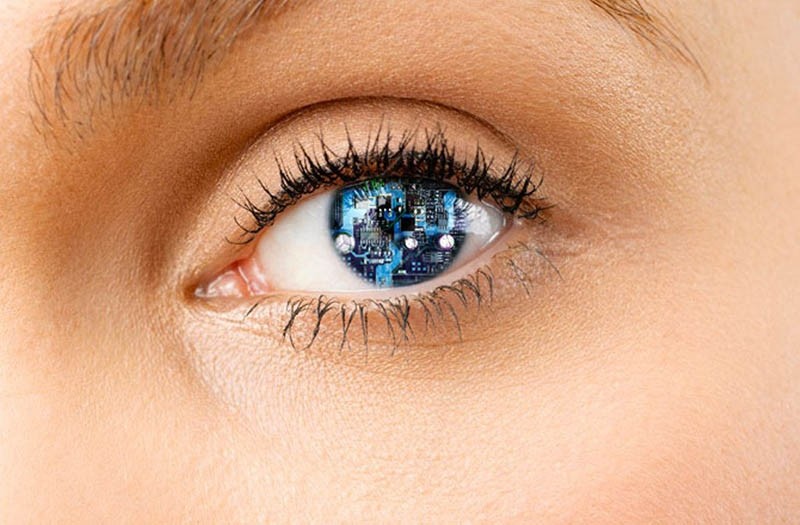
An electronically-controlled lens that could eventually function in an artificial eye is the latest invention to come out of Harvard School of Engineering and Applied Sciences.

The large-scale metalens, complete with an artificial muscle, is the initial step toward a sensory eye that could relay images to the human brain, according to the Harvard Gazette.

"This research combines breakthroughs in artificial muscle technology with metalens technology to create a tunable metalens that can change its focus in real time, just like the human eye," said Harvard graduate student and research co-author Alan She, adding that the future artificial eye could actually function better than a human eye.

"We go one step further to build the capability of dynamically correcting for aberrations such as astigmatism and image shift, which the human eye cannot naturally do."

The lens is made of metamaterial, a material engineered to have properties not found in natural substances, such as unique electromagnetic features.

Metalenses are very small, about the size of a piece of glitter, making them generally too small to function as an eye lens. However, scaling up the size of the lens was no easy task, as each expansion multiplied the already-information-dense nanomaterial.

To meet the challenge, the team succeeded in shrinking the file size to make it workable with the fabricated integrated circuits system.

The team then worked to bind the enlarged metalens to the artificial muscle, which consists of transparent dialectic elastomer actuators.

Elastomers stretch when an electric voltage is applied, allowing the lens to change size to focus, perform image shift and correct aberrations found in a human eye, such as astigmatism.

The complete, perfectly flat metalens is a mere 30 microns thick.

"All optical systems with multiple components — from cameras to microscopes and telescopes — have slight misalignments or mechanical stresses on their components, depending on the way they were built and their current environment, that will always cause small amounts of astigmatism and other aberrations, which could be corrected by an adaptive optical element," said She.

"Because the adaptive metalens is flat, you can correct those aberrations and integrate different optical capabilities onto a single plane of control."

The team still needs to work out a few kinks in the project, including reducing required voltage and improve lens functionality.

But the invention marks an important step toward the creation of a fully-functional artificial eye that might even work better than a real one.


  • shortlink copied
  • Last Update: Feb 27, 2018 5:07 pm
    KEYWORDS
    life
    The Daily Sabah Newsletter
    Keep up to date with what’s happening in Turkey, it’s region and the world.
    You can unsubscribe at any time. By signing up you are agreeing to our Terms of Use and Privacy Policy. This site is protected by reCAPTCHA and the Google Privacy Policy and Terms of Service apply.
    No Image
    Let's take a selfie: 'Youseum' in Sweden's Stockholm makes you the exhibit
    PHOTOGALLERY
    • POLITICS
    • Diplomacy
    • Legislation
    • War On Terror
    • EU Affairs
    • News Analysis
    • TÜRKİYE
    • Istanbul
    • Education
    • Investigations
    • Minorities
    • Diaspora
    • World
    • Mid-East
    • Europe
    • Americas
    • Asia Pacific
    • Africa
    • Syrian Crisis
    • İslamophobia
    • Business
    • Automotive
    • Economy
    • Energy
    • Finance
    • Tourism
    • Tech
    • Defense
    • Transportation
    • News Analysis
    • Lifestyle
    • Health
    • Environment
    • Travel
    • Food
    • Fashion
    • Science
    • Religion
    • History
    • Feature
    • Expat Corner
    • Arts
    • Cinema
    • Music
    • Events
    • Portrait
    • Performing Arts
    • Reviews
    • Sports
    • Football
    • Basketball
    • Motorsports
    • Tennis
    • Opinion
    • Columns
    • Op-Ed
    • Reader's Corner
    • Editorial
    • Photo gallery
    • DS TV
    • Jobs
    • privacy
    • about us
    • contact us
    • RSS
    © Turkuvaz Haberleşme ve Yayıncılık 2021