Daily Sabah logo

Politics
Diplomacy Legislation War On Terror EU Affairs Elections News Analysis
TÜRKİYE
Istanbul Education Investigations Minorities Expat Corner Diaspora
World
Mid-East Europe Americas Asia Pacific Africa Syrian Crisis Islamophobia
Business
Automotive Economy Energy Finance Tourism Tech Defense Transportation News Analysis
Lifestyle
Health Environment Travel Food Fashion Science Religion History Feature Expat Corner
Arts
Cinema Music Events Portrait Reviews Performing Arts
Sports
Football Basketball Motorsports Tennis
Opinion
Columns Op-Ed Reader's Corner Editorial
PHOTO GALLERY
JOBS ABOUT US RSS PRIVACY CONTACT US
© Turkuvaz Haberleşme ve Yayıncılık 2026

Daily Sabah - Latest & Breaking News from Turkey | Istanbul

  • Politics
    • Diplomacy
    • Legislation
    • War On Terror
    • EU Affairs
    • Elections
    • News Analysis
  • TÜRKİYE
    • Istanbul
    • Education
    • Investigations
    • Minorities
    • Expat Corner
    • Diaspora
  • World
    • Mid-East
    • Europe
    • Americas
    • Asia Pacific
    • Africa
    • Syrian Crisis
    • Islamophobia
  • Business
    • Automotive
    • Economy
    • Energy
    • Finance
    • Tourism
    • Tech
    • Defense
    • Transportation
    • News Analysis
  • Lifestyle
    • Health
    • Environment
    • Travel
    • Food
    • Fashion
    • Science
    • Religion
    • History
    • Feature
    • Expat Corner
  • Arts
    • Cinema
    • Music
    • Events
    • Portrait
    • Reviews
    • Performing Arts
  • Sports
    • Football
    • Basketball
    • Motorsports
    • Tennis
  • Gallery
  • Opinion
    • Columns
    • Op-Ed
    • Reader's Corner
    • Editorial
  • TV
  • Opinion
  • Columns
  • Op-Ed
  • Reader's Corner
  • Editorial

When waterways burn: Türkiye, Iraq and Development Road

by Nebi Miş

Oct 22, 2026 - 12:59 pm GMT+3
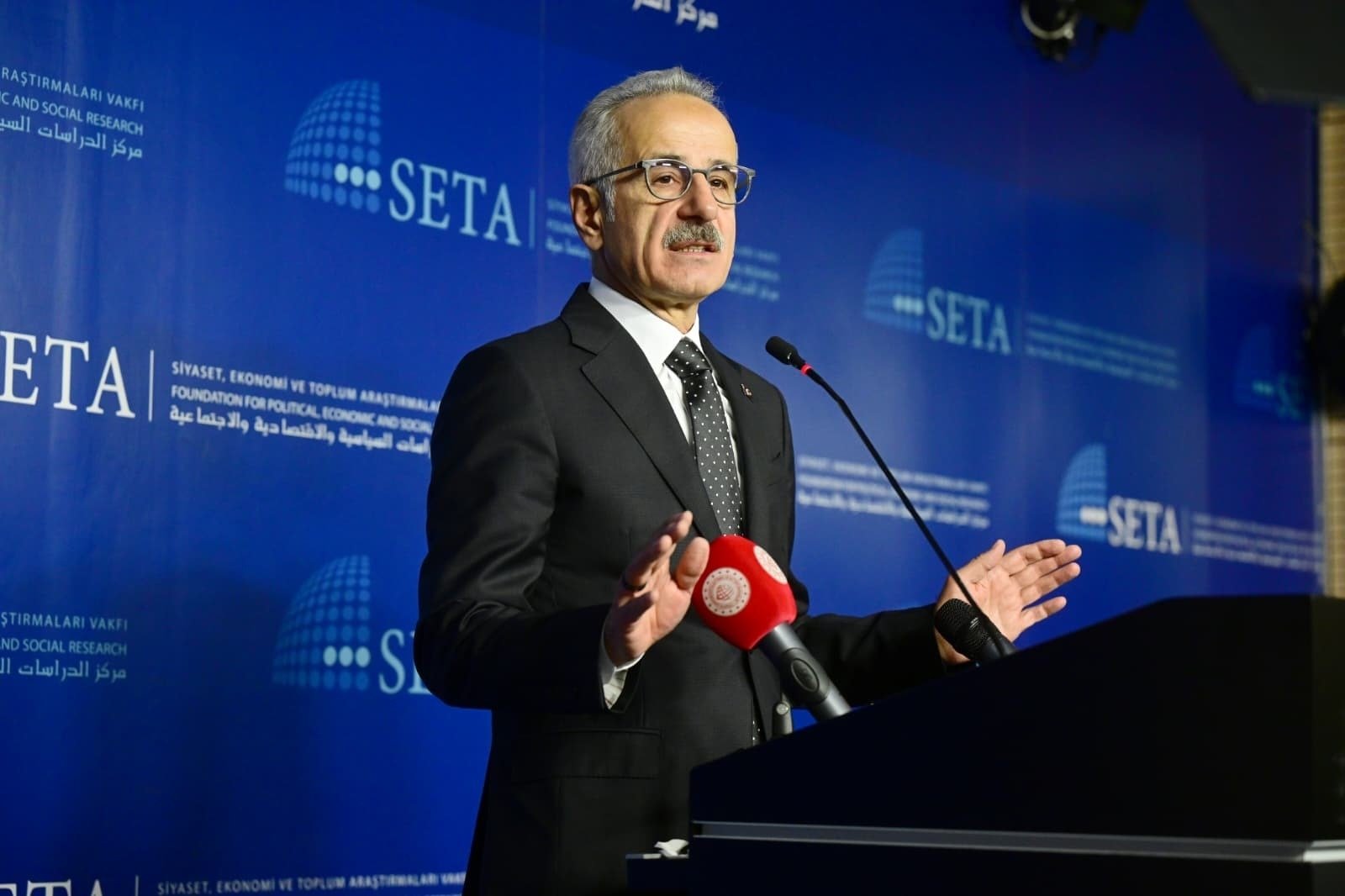
Transport and Infrastructure Minister Abdulkadir Uraloğlu delivers a speech at the event organized by SETA, Ankara, Türkiye, Oct. 19, 2026. (İHA Photo)
by Nebi Miş Oct 22, 2026 12:59 pm

As global conflicts threaten vital maritime routes, Türkiye and Iraq’s Development Road offers a strategic alternative for trade, connectivity and stability

The geo-economic balance of power around the world, not just in Türkiye’s neighborhood, is being reshaped by war. Dependence on a single transit point in supply chains drives up costs. Currently, armed conflicts are ongoing in areas that directly affect three key global maritime routes. It is almost as if the world’s fate depends on these waterways.

The American-Israeli war against Iran mounts pressure on the Strait of Hormuz, while the clash between Saudi Arabia and the Houthis fuels tensions around Bab al-Mandeb. Finally, the Russo-Ukrainian war undermines Black Sea ports and energy transit networks.

Due to these developments, delivering energy and goods to global markets has become increasingly difficult, while confidence in the uninterrupted flow of supplies has eroded. It is no secret that having alternative channels available allows states to make decisions with fewer constraints. In recent years, the relationship between connectivity and strategic autonomy has thus become increasingly evident.

Against the backdrop of the deepening fragility in global transport geopolitics, the Foundation for Political, Economic and Social Research (SETA) launched a highly significant report titled “The Development Road Project: From Economic Corridor to Strategic Power.” At the launch event, participants discussed the construction of the Development Road, the challenges involved, and the opportunities that the relevant countries, and especially Europe, could seize as a result. Following Transport and Infrastructure Minister Abdulkadir Uraloğlu’s keynote address, the report’s authors offered insights into where regional actors stood on this project based on field interviews, explaining how various parties saw the effort.

Once completed and operational, the Development Road Project will not solve all the region’s supply problems. However, its potential contributions to regional economic integration, greater mutual interdependence, and Iraq’s stability are undeniable.

Over the last century, the Middle East has been plagued by political fragmentation and security challenges despite its vast economic opportunities. Unfortunately, energy reserves and capital accumulation could not be translated into regional stability. To make matters worse, competition over economic resources served to aggravate this instability.

Within this context, Türkiye views the Development Road Project as “common ground” with the potential to mitigate fragmentation and to contribute to economic integration and, consequently, stability – not just a question of transportation geo-economics. In this sense, the project promises to make significant contributions to Iraq’s reconstruction, Türkiye’s production and logistics capacity, and the Gulf’s investment power and search for access to global markets.

That was Uraloğlu’s point precisely: “Today, the world isn’t just looking for the cheapest option. It is looking for the safest, shortest and most predictable route.” As such, diversifying routes and promoting the resilience of trade would serve as geopolitical leverage for countries.

The completion of this project depends on Iraq’s ability to preserve its economic potential under a secure, sustainable and stable government. The central government’s weakness, the presence of non-state armed actors, and the disputes between Baghdad and Irbil over jurisdictions, border crossings and revenue sharing continue to challenge this effort. In particular, Iran’s negative policy toward Iraq’s stability threatens to undermine such initiatives as well as fuel domestic strife.

Achieving the goal of a terror-free Türkiye and a terror-free region, the Iraqi government’s ability to eliminate non-state armed actors, and the successful prevention of outside interference in Iraq’s sovereignty would contribute to the successful implementation of the Development Road Project.


About the author
Nebi Miş is the general coordinator of the SETA Foundation.
The views and opinions expressed in this article are solely those of the author. They do not necessarily reflect the editorial stance, values or position of Daily Sabah. The newspaper provides space for diverse perspectives as part of its commitment to open and informed public discussion.
  • shortlink copied
  • KEYWORDS
    development road abdülkadir uraloğlu türkiye-iraq relations iraq terror-free initiative
    The Daily Sabah Newsletter
    Keep up to date with what’s happening in Turkey, it’s region and the world.
    You can unsubscribe at any time. By signing up you are agreeing to our Terms of Use and Privacy Policy. This site is protected by reCAPTCHA and the Google Privacy Policy and Terms of Service apply.
    No Image
    Antarctic life revealed through portholes in Türkiye's science mission
    PHOTOGALLERY
    • POLITICS
    • Diplomacy
    • Legislation
    • War On Terror
    • EU Affairs
    • News Analysis
    • TÜRKİYE
    • Istanbul
    • Education
    • Investigations
    • Minorities
    • Diaspora
    • World
    • Mid-East
    • Europe
    • Americas
    • Asia Pacific
    • Africa
    • Syrian Crisis
    • İslamophobia
    • Business
    • Automotive
    • Economy
    • Energy
    • Finance
    • Tourism
    • Tech
    • Defense
    • Transportation
    • News Analysis
    • Lifestyle
    • Health
    • Environment
    • Travel
    • Food
    • Fashion
    • Science
    • Religion
    • History
    • Feature
    • Expat Corner
    • Arts
    • Cinema
    • Music
    • Events
    • Portrait
    • Performing Arts
    • Reviews
    • Sports
    • Football
    • Basketball
    • Motorsports
    • Tennis
    • Opinion
    • Columns
    • Op-Ed
    • Reader's Corner
    • Editorial
    • Photo gallery
    • DS TV
    • Jobs
    • privacy
    • about us
    • contact us
    • RSS
    © Turkuvaz Haberleşme ve Yayıncılık 2021