As we all know, the Yalta Conference remains an unforgettable moment for people around the world. At Yalta, the Atlantic bloc and the Warsaw Pact divided up the world, and the Cold War began in its aftermath. We grew up hearing stories of a bipolar world and the Cold War throughout our youth.
After the Cold War ended and Russia retreated from the world stage, the U.S. remained as the world's sole global policeman. During the Cold War, one principle governing relations between states was the need to justify going to war. A state had to have a legitimate justification before attacking or attempting to occupy another country.
Later, the U.S., during this unipolar era, increasingly sidelined the U.N. and supranational institutions, effectively declaring: "If my interests require it, I will occupy Iraq or launch attacks on Yemen." In this sense, what was presented as "the New World Order" was not really an order at all. It was, in fact, the construction of a lawless international system under the leadership of the U.S.
Following the Arab Spring, Russia gradually returned to the world stage during the Syrian civil war. We can point to two factors behind this development. The first was the weak and indecisive leadership of the Democrats, particularly the Obama administration's failure to maintain an effective American foreign policy. The second was Russian President Vladimir Putin's ability to demonstrate his authority over Russia and pull a fragmented state back together. In this respect, Russia had once again made its presence felt on the world stage.
During this period, Russia deployed its navy to the Mediterranean and conducted intercontinental missile tests. One particularly striking development was the launch of cruise missiles from as far away as the Caspian Sea towards targets in Syria. This was a clear symbol of Russia's return to the international arena.
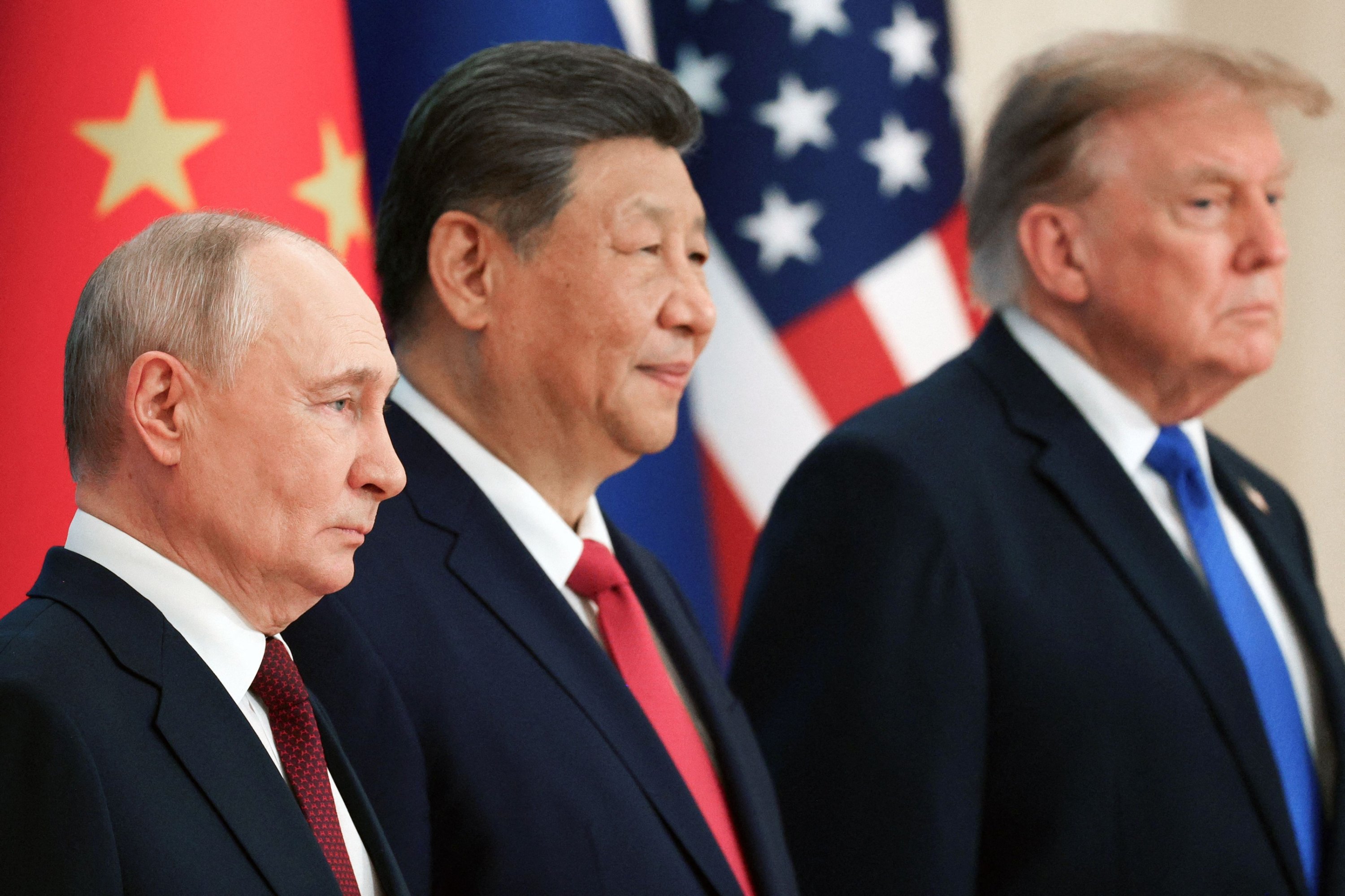
During his first term, U.S. President Donald Trump had virtually sidelined the European states. Then came the Biden era, which brought European countries together, but at a considerable price: It handed them a war, the war in Ukraine. At the trilateral summit held on the sidelines of the 33rd APEC Economic Leaders' Meeting, Trump and Putin, in a sense, arrived at the gathering alongside Chinese President Xi Jinping as the leaders of two war-weary powers.
The first of these war-weary states, Russia, has been at war with Ukraine, with the support of the entire Western bloc, for a long time. This conflict has left Russia weakened in several respects: In the eyes of its own citizens, strategically, and through the attacks on cities across the country, including Moscow, as well as the damage to its energy infrastructure. All this has left Russia facing serious vulnerabilities.
While Western allies have been collectively weakening Russia, China and Russia, in turn, have begun to weaken the U.S. through Iran. Trump came to the negotiating table, as the second war-weary leader, after first engaging in a not-so-successful power struggle with Iran. He also arrived politically weakened because of growing opposition to his support for Israel and the war involving Iran, and therefore the sharp rise in the cost of living in the U.S. These factors ultimately contributed to his party's defeat in the American elections.
Imagine a meeting in which, on one side, stands China: A superpower that continues to increase its production capacity, expand its economy, and steadily extend its global influence. Facing it is another superpower, the U.S., which is weary of war and has yet to find a way out of the Iranian trap.
Then consider Russia. Having spent five years at war in Ukraine, it too has been severely worn down by the conflict. At the table, the only leader in a relatively comfortable position is Xi Jinping. On the other side sit two war-weary powers. Looking at the gestures, facial expressions, attitudes and conduct of the leaders around that table, I believe we can already discern the direction in which the world is heading.
In terms of industrial capacity, financial balances and, not least, the advantages of having stayed out of direct war, the balance of power among these three states is shifting in China's favor. We may have witnessed, in this meeting, a snapshot of how two major powers have been weakened by war. But the consequences of this shift will become much more apparent in the years ahead.
Let us conclude with the words of the renowned Chinese strategist Sun Tzu: Wars are won and lost through alliances. The Western alliance weakened Russia. The alliance between Russia and China behind Iran’s resistance, in turn, weakened the U.S. And so, before Xi Jinping stood two leaders representing two war-weary powers. China, meanwhile, continues to enjoy the advantages of this unfolding situation.