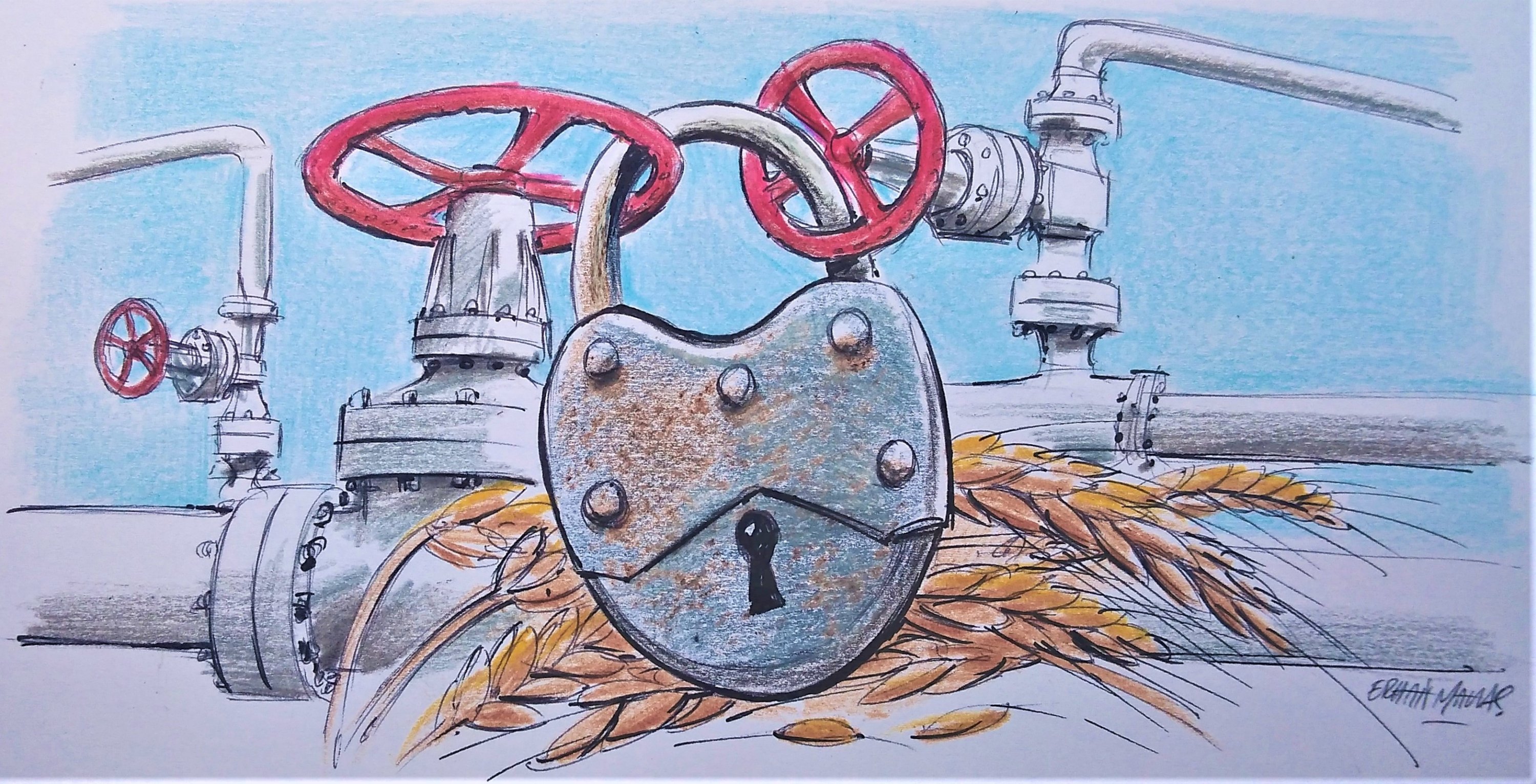
Although the leading economies of the world are members of important alliances and international organizations for economic, trade-related, military and political reasons, they have recently failed to show collaboration and cooperation befitting the "alliance" relationships in the management of global crises. Leaving Türkiye alone, a NATO member and a nation fighting the most dangerous and fiercest of international terrorist organizations, the PKK, despite NATO's clear rules; collapses in the supplies of masks and vaccines during the global pandemic period; and the leanings toward covert sanctions and obstacles contrary to the founding principles of global organizations are some of the practices we have become accustomed to in the last 10 years.
We are going through an interesting period in which a kind of primitive "nationalism" reflex has resurfaced. Some leading countries that were unable to maintain the market economy rules over the last 40 years have now intensified their "commercial protectionism" tendencies that are completely contrary to the economic model and system they advocate. The series of selfish moves and behaviors, becoming more and more obvious during the global pandemic, have almost reached their peak with the Russia-Ukraine war. For this reason, leading market experts and economists are seriously worried about a food and energy "nationalism" that could escalate this fall and winter. This situation undoubtedly challenges the efforts of many international organizations, especially the United Nations, that defend global values and struggle for global cooperation.
We have experienced energy "nationalism" before. We have seen countries that confiscated natural gas that was the right of another country, through pipelines passing through their own country and taking other actions that will put the country that owns the gas in question in trouble. Or, we have seen examples of countries that use the weather conditions or technical problems as an excuse to not pump the natural gas that they have sold into the pipeline. For this reason, we hope that we do not encounter situations in which primitive "nationalist" feelings about energy rise, and countries ignore each other or usurp the energy resources of others in the harsh autumn and winter conditions that await Europe. In this sense, an important test of cooperation and solidarity awaits Europe, and there is hope that selfish attitudes will not resurface, examples of which were numerous in the 2008 global financial crisis and the global pandemic.
The same is undoubtedly true for food. The grain agreement has come to life with Türkiye's intense diplomatic efforts and sincere dialogue and is moving forward under the responsibility of the United Nations. It has been a historical step for countries that could resort to food "nationalism" to pull themselves back together. We hope that the next autumn and winter will be a period when countries, especially in Africa and the Middle East, in need of food support witness sincere efforts from other countries instead of selfish stockpiling and that the wealthier nations will come to their aid on behalf of the U.N. Otherwise, a primitive food "nationalism" could lead to the deprivation of food support in Africa and the Middle East, causing the forced migration of desperate millions, and hundreds of thousands of people to become refugees from hunger. This would, in turn, lead to international chaos and humanitarian turmoil, and it will also trigger many other serious problems.
For this reason, sincere support for the efforts of the U.N., sincere efforts of the G-7 and G-20 platforms to find concrete solutions to the global food and energy supply crisis, the success of the European Union in establishing a fair and transparent supply mechanism between countries and not leaving Africa and the Middle East alone in this struggle are all critical for international politics to continue their efforts on a reasonable basis. At this point, the leading countries of the global supply chain also have important duties in not taking advantage of the vulnerabilities of the global system under duress to meet the needs of the world economy without reducing their production capacities. Türkiye does justice to its role in the global system with its Keynesian and heterodox policies and its set of economic policies that support production, employment, exports and investments. I hope that the leading economies will have the same sensitivity.