Daily Sabah logo

Politics
Diplomacy Legislation War On Terror EU Affairs Elections News Analysis
TÜRKİYE
Istanbul Education Investigations Minorities Expat Corner Diaspora
World
Mid-East Europe Americas Asia Pacific Africa Syrian Crisis Islamophobia
Business
Automotive Economy Energy Finance Tourism Tech Defense Transportation News Analysis
Lifestyle
Health Environment Travel Food Fashion Science Religion History Feature Expat Corner
Arts
Cinema Music Events Portrait Reviews Performing Arts
Sports
Football Basketball Motorsports Tennis
Opinion
Columns Op-Ed Reader's Corner Editorial
PHOTO GALLERY
JOBS ABOUT US RSS PRIVACY CONTACT US
© Turkuvaz Haberleşme ve Yayıncılık 2025

Daily Sabah - Latest & Breaking News from Turkey | Istanbul

  • Politics
    • Diplomacy
    • Legislation
    • War On Terror
    • EU Affairs
    • Elections
    • News Analysis
  • TÜRKİYE
    • Istanbul
    • Education
    • Investigations
    • Minorities
    • Expat Corner
    • Diaspora
  • World
    • Mid-East
    • Europe
    • Americas
    • Asia Pacific
    • Africa
    • Syrian Crisis
    • Islamophobia
  • Business
    • Automotive
    • Economy
    • Energy
    • Finance
    • Tourism
    • Tech
    • Defense
    • Transportation
    • News Analysis
  • Lifestyle
    • Health
    • Environment
    • Travel
    • Food
    • Fashion
    • Science
    • Religion
    • History
    • Feature
    • Expat Corner
  • Arts
    • Cinema
    • Music
    • Events
    • Portrait
    • Reviews
    • Performing Arts
  • Sports
    • Football
    • Basketball
    • Motorsports
    • Tennis
  • Gallery
  • Opinion
    • Columns
    • Op-Ed
    • Reader's Corner
    • Editorial
  • TV
  • Life
  • Health
  • Environment
  • Travel
  • Food
  • Fashion
  • Science
  • Religion
  • History
  • Feature
  • Expat Corner

Ready for take-off, again? NASA set for 2nd attempt at moon launch

by Reuters

WASHINGTON Aug 31, 2022 - 11:45 am GMT+3
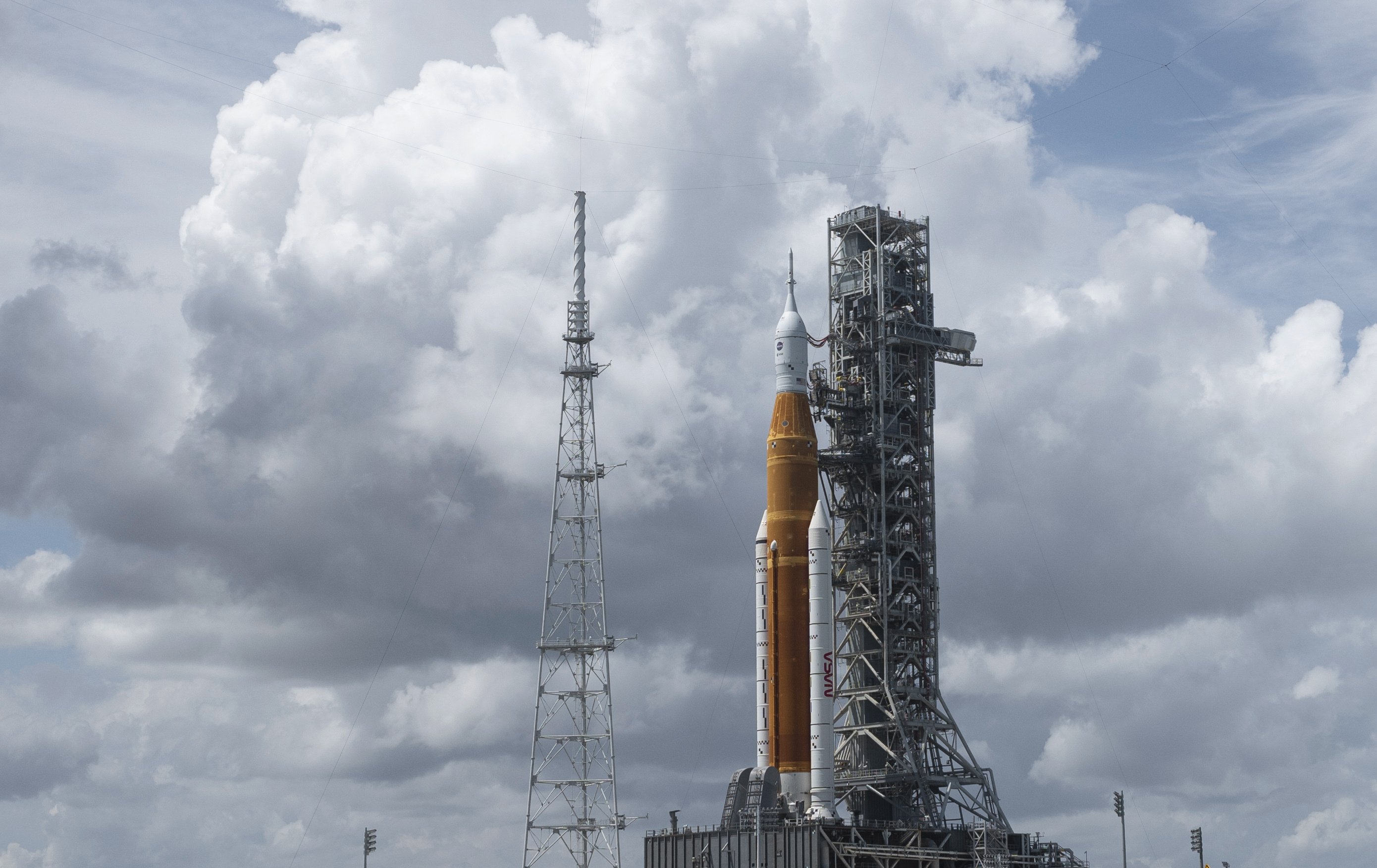
NASA's Space Launch System (SLS) rocket with the Orion spacecraft aboard is seen atop the mobile launcher at Launch Pad 39B, at Kennedy Space Center in Cape Canaveral, Florida, U.S., Aug. 30, 2022. (AP Photo)
by Reuters Aug 31, 2022 11:45 am

After a problematic few hours earlier this week that saw engine trouble halt the countdown of the debut launch, NASA will be trying again on Saturday, Sept. 3, to launch its giant next-generation moon rocket's test flight as the first part of its Artemis moon mission, agency officials said.

But prospects for success on Saturday appeared clouded by weather reports predicting just a 40% chance of favorable conditions that day, while the U.S. space agency acknowledged some outstanding technical issues remain to be solved.

At a media briefing a day after Monday's first countdown ended with the flight scrubbed, NASA officials said Monday's experience was useful in trouble-shooting some problems and that additional difficulties could be worked through in the midst of a second launch try.

In that way, the launch exercise was serving essentially as a real-time dress rehearsal that hopefully would conclude with an actual, successful liftoff.

For now, NASA officials said, plans call for keeping the 32-story-tall Space Launch System (SLS) rocket and its Orion astronaut capsule on its launch pad to avoid having to roll the massive spacecraft back into its assembly building for a more extensive round of tests and repairs.

If all goes as hoped, the SLS will blast off from the Kennedy Space Center in Cape Canaveral, Florida, on Saturday afternoon, during a two-hour launch window that opens at 2:17 p.m., sending the Orion on an uncrewed, six-week test flight around the moon and back.

The long-awaited voyage would kick off NASA's moon-to-Mars Artemis program, the successor to the Apollo lunar project of the 1960s and '70s, before U.S. human spaceflight efforts shifted to low-Earth orbit with space shuttles and the International Space Station.

NASA's initial Artemis I launch attempt on Monday ended after data showed that one of the rocket's main-stage engines failed to reach the proper pre-launch temperature required for ignition, forcing a halt to the countdown and a postponement.

Speaking to reporters on Tuesday, mission managers said they believe a faulty sensor in the rocket's engine section was the culprit for the engine cooling issue.

As a remedy for Saturday's attempt, mission managers plan to begin that engine-cooling process roughly 30 minutes earlier in the launch countdown, NASA's Artemis launch director Charlie Blackwell-Thompson said. But a full explanation for the faulty sensor requires more data analysis by engineers.

"The way the sensor is behaving doesn't line up with the physics of the situation," said John Honeycutt, NASA's SLS program manager.

The sensor was last checked and calibrated months ago in the rocket factory, Honeycutt said. Replacing the sensor would require rolling the rocket back to its assembly building, a process that could delay the mission for months.

The first voyage of the SLS-Orion, a mission dubbed Artemis I, aims to put the 5.75-million-pound vehicle through its paces in a rigorous demonstration flight pushing its design limits, before NASA deems it reliable enough to carry astronauts.

Named for the goddess who was Apollo's twin sister in ancient Greek mythology, Artemis seeks to return astronauts to the moon's surface as early as 2025, though many experts believe that time frame will likely slip by a few years.

The last humans to walk on the moon were the two-man descent team of Apollo 17 in 1972, following in the footsteps of 10 other astronauts during five earlier missions beginning with Apollo 11 in 1969.

Artemis also is enlisting commercial and international help to eventually establish a long-term lunar base as a stepping stone to even more ambitious human voyages to Mars, a goal NASA officials say would probably take until at least the late 2030s to achieve.

But NASA has many steps to take along the way, starting with getting the SLS-Orion vehicle into space.


  • shortlink copied
  • Last Update: Aug 31, 2022 1:13 pm
    KEYWORDS
    space mission moon mission space exploration nasa artemis
    The Daily Sabah Newsletter
    Keep up to date with what’s happening in Turkey, it’s region and the world.
    You can unsubscribe at any time. By signing up you are agreeing to our Terms of Use and Privacy Policy. This site is protected by reCAPTCHA and the Google Privacy Policy and Terms of Service apply.
    No Image
    Out of this world: Best of Milan Fashion Week 2022
    PHOTOGALLERY
    • POLITICS
    • Diplomacy
    • Legislation
    • War On Terror
    • EU Affairs
    • News Analysis
    • TÜRKİYE
    • Istanbul
    • Education
    • Investigations
    • Minorities
    • Diaspora
    • World
    • Mid-East
    • Europe
    • Americas
    • Asia Pacific
    • Africa
    • Syrian Crisis
    • İslamophobia
    • Business
    • Automotive
    • Economy
    • Energy
    • Finance
    • Tourism
    • Tech
    • Defense
    • Transportation
    • News Analysis
    • Lifestyle
    • Health
    • Environment
    • Travel
    • Food
    • Fashion
    • Science
    • Religion
    • History
    • Feature
    • Expat Corner
    • Arts
    • Cinema
    • Music
    • Events
    • Portrait
    • Performing Arts
    • Reviews
    • Sports
    • Football
    • Basketball
    • Motorsports
    • Tennis
    • Opinion
    • Columns
    • Op-Ed
    • Reader's Corner
    • Editorial
    • Photo gallery
    • DS TV
    • Jobs
    • privacy
    • about us
    • contact us
    • RSS
    © Turkuvaz Haberleşme ve Yayıncılık 2021