Daily Sabah logo

Politics
Diplomacy Legislation War On Terror EU Affairs Elections News Analysis
TÜRKİYE
Istanbul Education Investigations Minorities Expat Corner Diaspora
World
Mid-East Europe Americas Asia Pacific Africa Syrian Crisis Islamophobia
Business
Automotive Economy Energy Finance Tourism Tech Defense Transportation News Analysis
Lifestyle
Health Environment Travel Food Fashion Science Religion History Feature Expat Corner
Arts
Cinema Music Events Portrait Reviews Performing Arts
Sports
Football Basketball Motorsports Tennis
Opinion
Columns Op-Ed Reader's Corner Editorial
PHOTO GALLERY
JOBS ABOUT US RSS PRIVACY CONTACT US
© Turkuvaz Haberleşme ve Yayıncılık 2026

Daily Sabah - Latest & Breaking News from Turkey | Istanbul

  • Politics
    • Diplomacy
    • Legislation
    • War On Terror
    • EU Affairs
    • Elections
    • News Analysis
  • TÜRKİYE
    • Istanbul
    • Education
    • Investigations
    • Minorities
    • Expat Corner
    • Diaspora
  • World
    • Mid-East
    • Europe
    • Americas
    • Asia Pacific
    • Africa
    • Syrian Crisis
    • Islamophobia
  • Business
    • Automotive
    • Economy
    • Energy
    • Finance
    • Tourism
    • Tech
    • Defense
    • Transportation
    • News Analysis
  • Lifestyle
    • Health
    • Environment
    • Travel
    • Food
    • Fashion
    • Science
    • Religion
    • History
    • Feature
    • Expat Corner
  • Arts
    • Cinema
    • Music
    • Events
    • Portrait
    • Reviews
    • Performing Arts
  • Sports
    • Football
    • Basketball
    • Motorsports
    • Tennis
  • Gallery
  • Opinion
    • Columns
    • Op-Ed
    • Reader's Corner
    • Editorial
  • TV
  • Life
  • Health
  • Environment
  • Travel
  • Food
  • Fashion
  • Science
  • Religion
  • History
  • Feature
  • Expat Corner

Drought reveals hidden Roman ruins, redraws Swiss maps

by Reuters

VAUD, Switzerland Sep 30, 2026 - 3:35 pm GMT+3
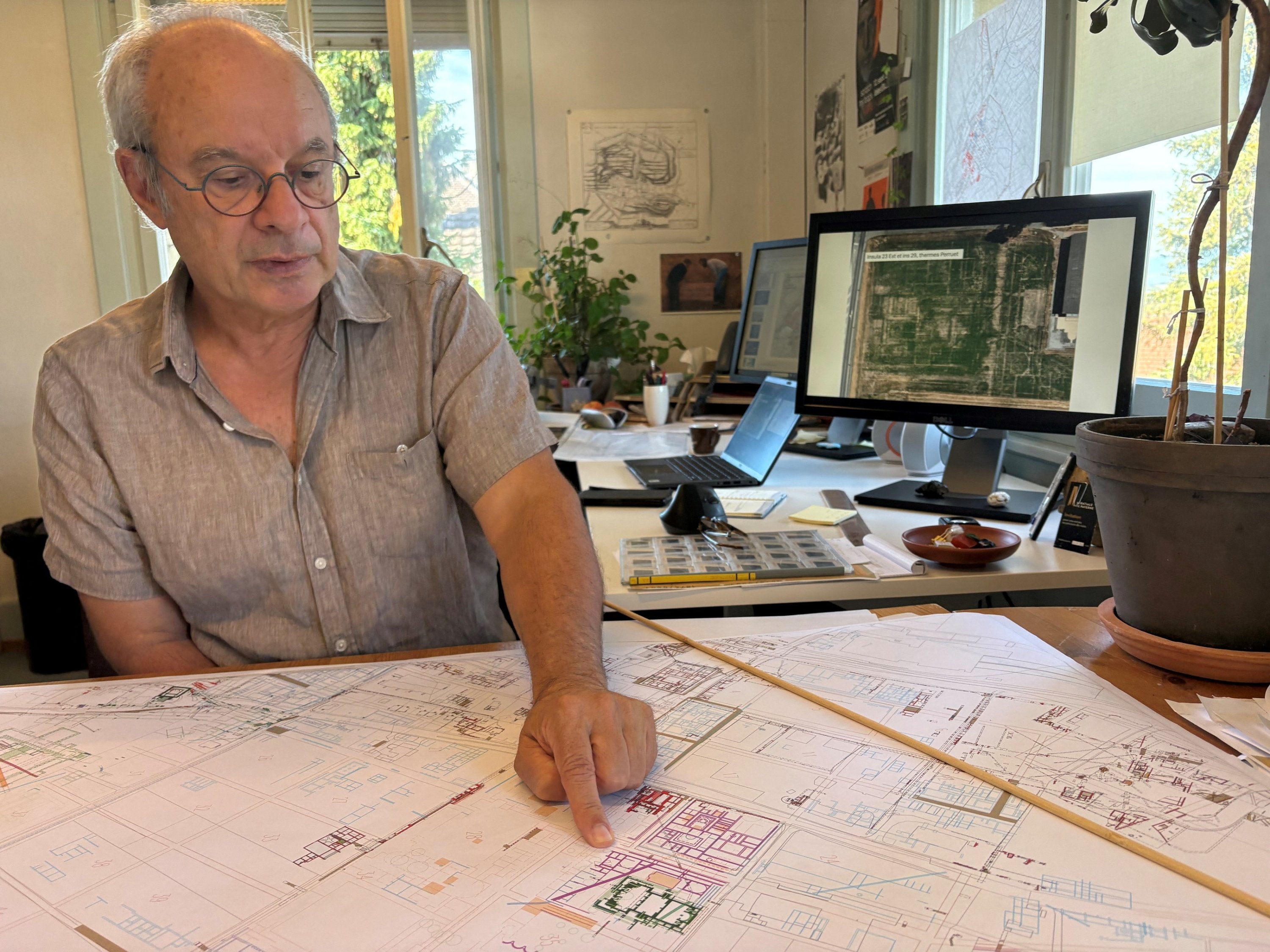
Archaeologist Pierre Blanc, head of excavations for the Roman site and museum of Avenches, points to new Roman buildings added to the map, Vaud, Switzerland, Sept. 28, 2026. (Reuters Photo)
by Reuters Sep 30, 2026 3:35 pm

Archaeologists are redrawing Roman ⁠maps of Switzerland after traces of ⁠long-buried ruins emerged as the country endured the hottest summer on record.

Drought can reveal hidden archaeological sites through "parch marks" ​created when vegetation above them withers, ​one of several ⁠effects of this year's heat waves, which also exposed World War II wrecks on river beds.

Alerted by a history enthusiast, archaeologists in the Swiss canton of Vaud used a drone to take daily images of fields around Aventicum, the former capital of Roman Helvetia, founded 2,000 years ago after Julius Caesar defeated local tribes. It is now the site of the small town of Avenches.

"These are the richest discoveries made there in the last 50 years, ⁠at ⁠least over the last two generations of archaeologists," said Jordan Anastassov, archaeologist for Vaud.

The images revealed traces of thermal baths, houses, roads and a possible temple that were previously unknown or dimly understood, many in never-before-excavated areas of the city, which thrived under Roman rule before gradually fading as Germanic incursions increased from the third century onward.

The team of five archaeologists superimposed the ⁠discoveries onto maps in purple, filling blank spaces and correcting mistaken markings.

"We are now asking really interesting questions we wouldn't otherwise be asking," said archaeologist Hugo Amoroso.

Some ​of the traces captured from June to August vanished after mowing and ​with lower temperatures, but the perimeter of a new pool in the baths is still visible in a partially ⁠withered alfalfa ‌field as ‌unseasonably warm weather has persisted in September.

Other buried ⁠historical remains have emerged elsewhere in Switzerland ‌and Europe, but many are harder to interpret because they are isolated and ​lack dedicated researchers.

The Swiss ⁠archaeologists will present their findings to peers and may ⁠conduct targeted digs later.

"We aren't going to wish for droughts," ⁠said Pierre ​Blanc, director of excavations for the site. "But we're going to make the most of this and keep looking."


  • shortlink copied
  • KEYWORDS
    drought roman maps heat wave climate change roman era excavations
    The Daily Sabah Newsletter
    Keep up to date with what’s happening in Turkey, it’s region and the world.
    You can unsubscribe at any time. By signing up you are agreeing to our Terms of Use and Privacy Policy. This site is protected by reCAPTCHA and the Google Privacy Policy and Terms of Service apply.
    No Image
    Daily life continues amid hardship in Nigeria's Kano
    PHOTOGALLERY
    • POLITICS
    • Diplomacy
    • Legislation
    • War On Terror
    • EU Affairs
    • News Analysis
    • TÜRKİYE
    • Istanbul
    • Education
    • Investigations
    • Minorities
    • Diaspora
    • World
    • Mid-East
    • Europe
    • Americas
    • Asia Pacific
    • Africa
    • Syrian Crisis
    • İslamophobia
    • Business
    • Automotive
    • Economy
    • Energy
    • Finance
    • Tourism
    • Tech
    • Defense
    • Transportation
    • News Analysis
    • Lifestyle
    • Health
    • Environment
    • Travel
    • Food
    • Fashion
    • Science
    • Religion
    • History
    • Feature
    • Expat Corner
    • Arts
    • Cinema
    • Music
    • Events
    • Portrait
    • Performing Arts
    • Reviews
    • Sports
    • Football
    • Basketball
    • Motorsports
    • Tennis
    • Opinion
    • Columns
    • Op-Ed
    • Reader's Corner
    • Editorial
    • Photo gallery
    • DS TV
    • Jobs
    • privacy
    • about us
    • contact us
    • RSS
    © Turkuvaz Haberleşme ve Yayıncılık 2021