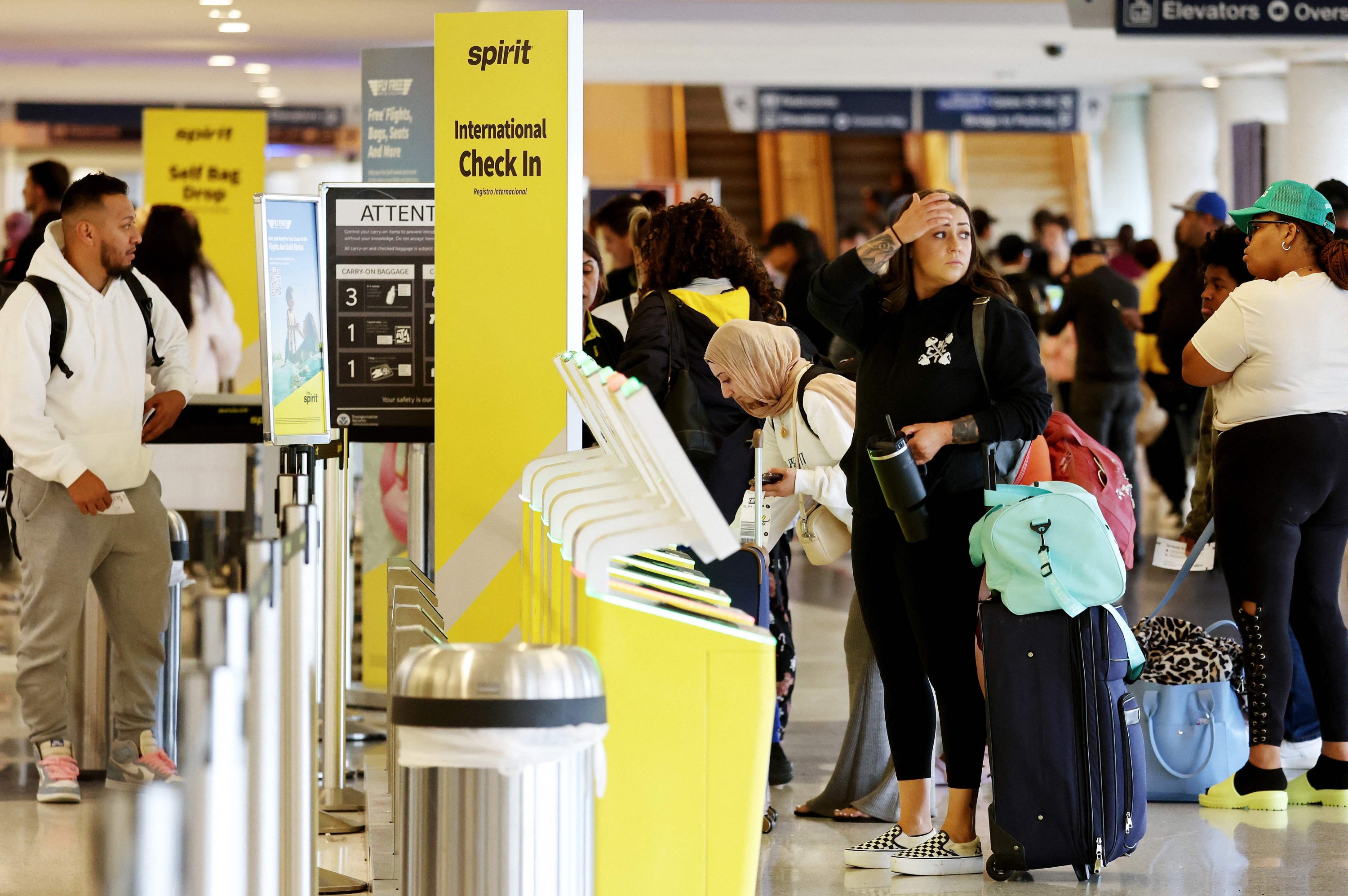
Airlines on Sunday expressed their readiness to prevent a recurrence of last year's travel turmoil, yet cautioned that certain flights might still face disruptions caused by strikes by air traffic controllers.
The companies also criticized compensation schemes that hold them liable for compensating passengers for delays that are beyond their control.
"I am reasonably confident that we'll be able to get through this peak summer without too much disruption," Willie Walsh, director-general of the International Air Transport Association (IATA), said in an interview on Sunday.
However, this week, airline leaders attending IATA's annual meeting in Istanbul remain concerned about air traffic control disruption in Europe and the United States.
"But as far as they are concerned, they have fulfilled their obligation to get their resources in place for this summer. Most of the airports, I think, will be okay, as well; I think they've learned the lessons from last year," Walsh told Reuters.
A faster-than-expected rebound in air travel coupled with labor shortages caused chaos at several airports in Europe and North America last summer. In addition, it prompted a row between airlines and airports over passenger caps designed to ease the pressure.
Rising disputes between travelers and airlines globally have led to calls for passenger compensation.
Legislation is under review in Canada, while the U.S. government is writing new rules and the European Union is pushing for more vigorous enforcement of its existing "Regulation 261," which requires compensation for delays of more than three hours.
"Ultimately, it is the consumer who's paying because this is, of course, being borne by the industry, but the industry can't just absorb that," Walsh said.
"The more expense that airlines have to incur because of problems outside of their control, the more that will be reflected in ticket prices, and it will drive ticket prices up. It is a very, very frustrating environment to be operating in".
Some passenger groups have accused airlines of skirting compensation by invoking an exemption for exceptional circumstances. However, EU rules allow such exemptions as long as airlines show they have taken reasonable steps to prevent delays.
Airlines have reported solid bookings for this summer as air traffic returns toward pre-COVID-19 levels.
European air traffic control agency Eurocontrol warned late last year that 2023 could be "the most challenging year of the last decade" due to the Ukraine conflict, possible strikes, rising numbers of aircraft and the reopening of Asian markets.