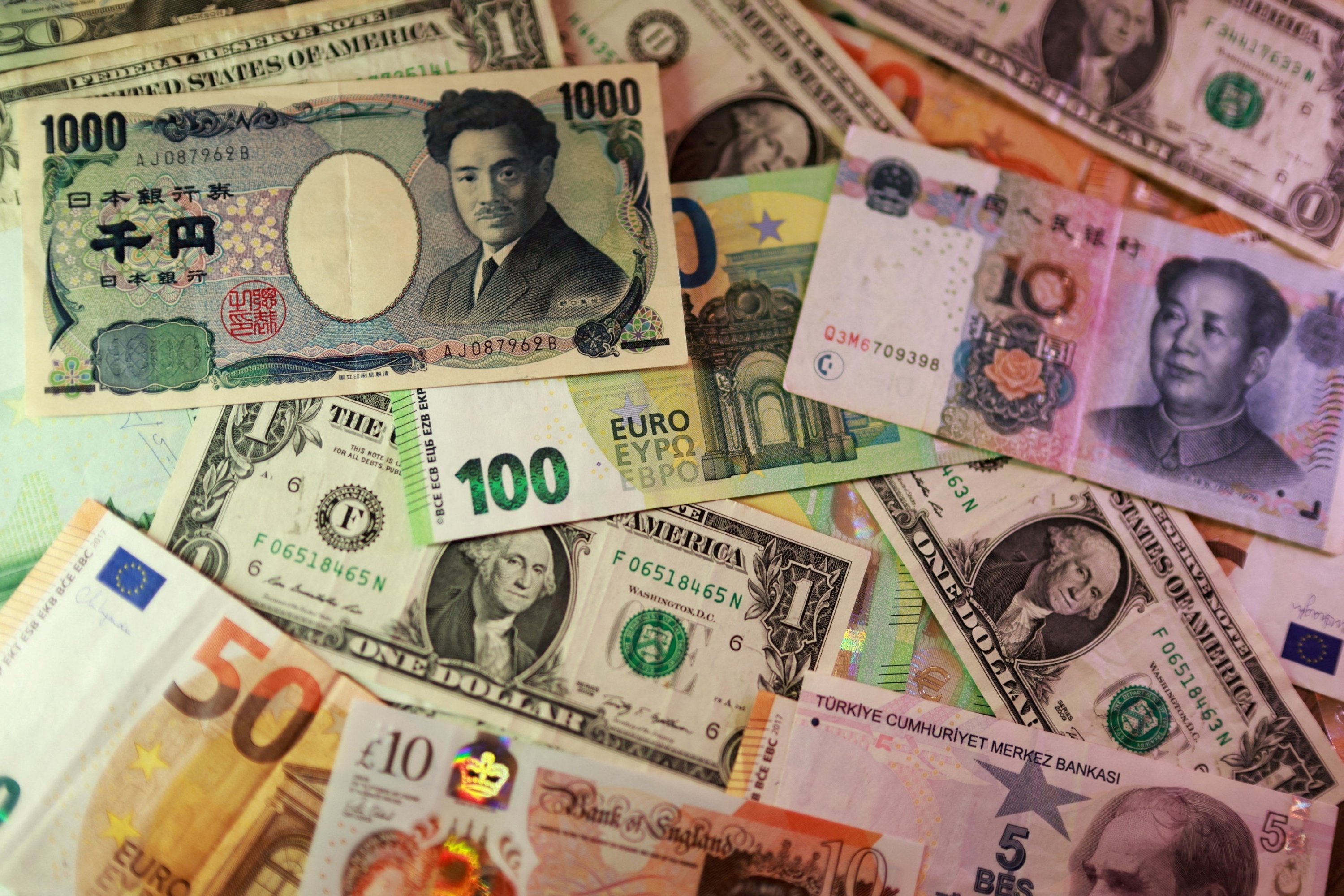
Government borrowing costs in the U.S., Germany, the U.K. and Japan have hit or are close to multi-decade peaks amid growing worries about inflation and rising interest rates, along with anxiety about their debt loads.
Elevated bond yields could squeeze households and companies and they are also exacerbating government finances.
Here's a look at what's behind the move in some major economies.
Japan's 10-year bond yield hit 3% on Tuesday for the first time since 1996, a milestone for an economy still emerging from an era of ultra-low rates.
Britain's 30-year borrowing costs are near 30-year highs, and German and French 10-year yields this week hit levels last seen in 2011 and 2008, respectively.
U.S. 10-year Treasury yields on Wednesday rose to their highest since mid-2023 at around 4.80%.
A renewed rise in oil prices on U.S.-Iran tensions is driving yields higher as elevated inflation leaves traders braced for more rate hikes.
It adds to concerns about rising borrowing. The U.S. debt pile just crossed $40 trillion, while debt as a share of economic output is at or above 100% across the G-7 group of major economies, apart from Germany.
A hawkish speech by U.S. Federal Reserve (Fed) Chair Kevin Warsh at the Jackson Hole symposium has also added to traders' rate hike bets.
Bond yields set the tone for borrowing costs across economies, from government debt to mortgages to student and car loans. Rising rates make borrowing and spending less attractive and can slow economic growth.
For instance, U.S. 30-year mortgage rates have risen to a one-year high of nearly 6.7% as yields have climbed on 10-year U.S. Treasuries.
Rising yields mean governments face higher costs as they roll over debt.
After a borrowing surge and rise in yields, Britain's interest bill of almost 4% of output is now roughly double its pre-pandemic decade average, its fiscal watchdog said in March, and eclipses the defense budget.
Bond yields also ripple through markets. Higher yields theoretically make stocks less attractive, though strong earnings have kept equities buoyant. And heavily leveraged hedge funds, which trade across countless markets, could come under pressure, too.
A surge in bond sales to fund AI investments is another factor pushing up bond yields.
Analysts point to the laws of supply and demand: if there is a jump in the need for borrowing, lenders can charge higher interest rates, pushing up yields.
Five of the biggest AI hyperscalers – Alphabet, Amazon, Meta, Microsoft and Oracle – have issued $220 billion of debt already this year as they fund investments in data centers and models, LSEG data shows. This is more than double last year's total figure.
Borrowing for AI investments has helped push global corporate bond issuance to a record $4.9 trillion so far in 2026, LSEG data shows, up 14% from this point a year ago.
The U.S. Treasury recently announced bond buybacks, which analysts say are aimed at limiting rising borrowing costs.
That initially helped stabilise the market, but long-dated bond yields have since crept back up.
U.S. Treasury Secretary Scott Bessent says that worries about rising debt and yields overlook the strength of the U.S. economy.
Central banks can also buy bonds if markets are stressed, as the Bank of England (BoE) did during the 2022 U.K. mini-budget crisis.
The European Central Bank (ECB) also has the power to buy government bonds to stem an "unwarranted, disorderly" rise in borrowing costs under its Transmission Protection Instrument, as long as a country facing stress complies with EU budget rules.
Many investors say the current rise in yields is orderly and reflects higher borrowing and inflation.
Falling oil prices would help short-term, but ultimately, longer-term borrowing costs will only come down durably once governments take concerted steps to bring down debt or boost growth, they say.
Unless they do that, bond vigilantes will be on alert.
The term refers to investors who seek to impose fiscal discipline on governments they perceive as profligate by demanding higher compensation to buy their bonds.
Investors can also demand more compensation if they think policymakers are failing to contain inflation.