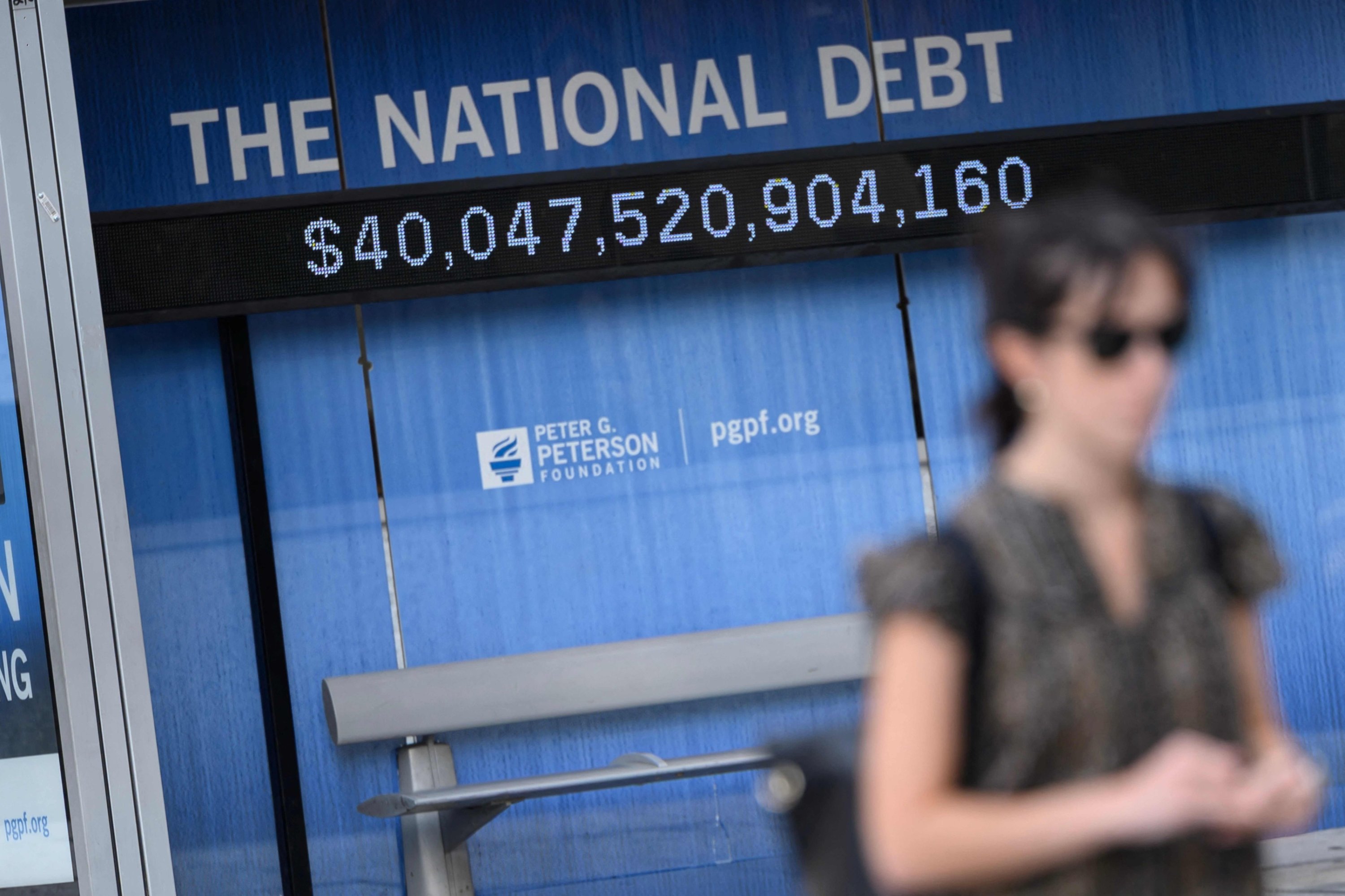
The U.S. national debt has surged past $40 trillion for the first time, more than doubling in less than a decade as Washington's mounting fiscal burden reaches another historic milestone, Treasury Department data showed.
Total public debt outstanding reached $40.047 trillion on Tuesday, rising from $39.987 trillion a day earlier, the Treasury’s Debt to the Penny dataset showed.
The total comprises $32.266 trillion in debt held by the public and $7.782 trillion in intragovernmental holdings.
The federal debt stood at approximately $19.95 trillion when President Donald Trump first took office in January 2017 and reached $27.75 trillion by the end of his first term.
It then climbed to roughly $36.22 trillion during former President Joe Biden’s four-year presidency before increasing by another $3.8 trillion since Trump returned to office.
Debt increased by approximately $11.6 trillion across Trump’s two terms and by about $8.5 trillion under Biden.
Persistent budget deficits, pandemic-related borrowing, tax cuts, growing social program expenditures and rising interest costs have contributed to the increase.
"Forty trillion dollars of debt doesn’t exist solely on the government’s ledgers; it is felt throughout the economy and finds its way to the pocketbooks of people one way or another," said Maya MacGuineas, president of the nonpartisan Committee for a Responsible Federal Budget (CRFB).
"The more we borrow, the more we exacerbate inflation, squeeze out other priorities in the budget, and leave ourselves vulnerable to emergencies at home and turmoil abroad," MacGuineas said in a statement just after the Treasury data was released.
She said the $40 trillion figure was reached less than five months after debt reached $39 trillion, and has quadrupled in less than 20 years after taking until 1981 to reach $1 trillion for the first time.
"It is staggering how predictable the fiscal decline of a global power can become," MacGuineas added.
Global U.S. creditors may already be growing wary, with demand from foreign investors holding nearly one-third of Treasuries declining over the past year.
Days after a $25-billion auction of 30-year Treasury bonds went off at the highest yield since 2021, yields on so-called long bonds on Tuesday hit their highest levels in nearly two decades as investors demanded greater compensation in the face of hefty U.S. government bond issuance. Yields move inversely to bond prices.
On Wednesday, U.S. Treasury Secretary Scott Bessent took a bold step to push long bond yields back down, announcing a doubling of buyback sizes for 10- to 30-year Treasuries to at least $4 billion per operation.
Higher Treasury yields at the longer end tend to push up interest rates for mortgages, car and commercial loans. With the mountain of debt showing no signs of abating, Trump on Wednesday repeated his frequent demand for lower rates.
Asked at the White House whether Americans should worry about bond market volatility, Trump said: "I don't think so at all. I think we have a very powerful country, and we're powering through these ridiculous interest rates – they're ridiculous. Look, when our country is strong, interest rates should go down."