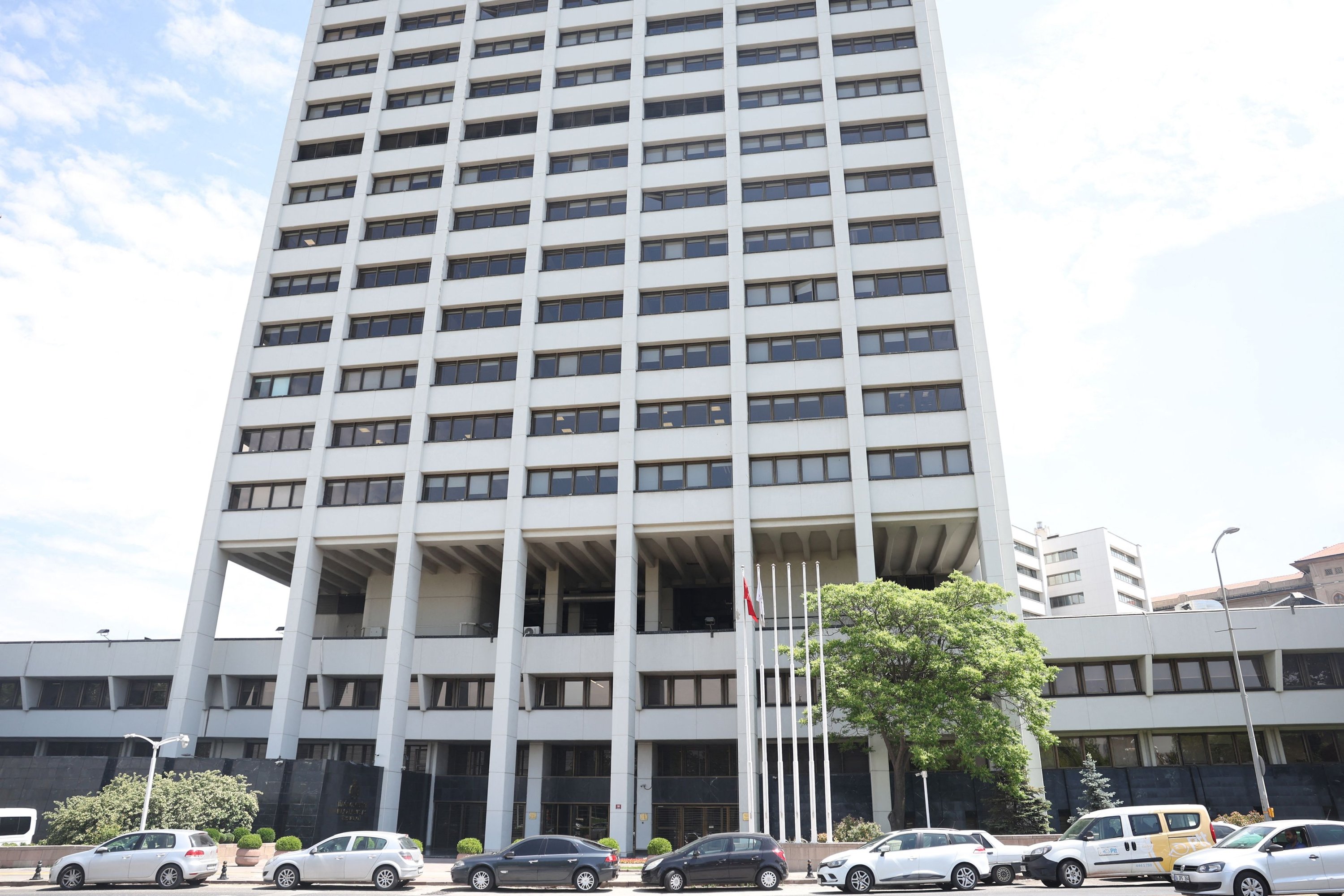
Türkiye's central bank resumed one-week repo auctions Monday after a nearly six-month suspension, supporting risk appetite in domestic markets and signaling a gradual return toward normal liquidity management conditions.
The Central Bank of the Republic of Türkiye (CBRT) announced Sunday it had decided to restart one-week repo auctions, which had been suspended on March 1 following increased market volatility after the outbreak of the U.S.-Israeli war with Iran.
The move means the central bank will once again use its main weekly funding channel alongside other liquidity management tools.
The CBRT offered TL1 billion ($21 million) in one-week funding at 37% Monday. That compares with the 40% overnight lending rate that had effectively become the main funding rate during the suspension.
The resumption of repo auctions is being interpreted as a signal that the CBRT is moving away from the tighter and more controlled funding framework it adopted after geopolitical tensions triggered increased market volatility.
During the suspension, banks' liquidity needs were largely met through the overnight lending facility at the upper end of the central bank's interest-rate corridor.
The move could therefore lower banks' funding costs and pull short-term market rates closer to the 37% policy rate.
The banking index on Borsa Istanbul Stock Exchange (BIST) rose by nearly 4% Monday as investors anticipated that lower funding costs could improve banks' profitability.
One-week repo auctions are among the central bank's main tools for managing liquidity in the banking system and meeting lenders' lira funding needs.
Under repo transactions, banks provide eligible securities as collateral to obtain lira funding from the central bank for a specified period.
Erhan Aslanoğlu, a professor at Istanbul Bilgi University, said the CBRT's move was broadly expected, although its timing came as a surprise.
Aslanoğlu said the move appeared consistent with CBRT Governor Fatih Karahan's last assessment that the worst phase of the Iran war's economic impact had passed under the bank's base-case scenario.
The central bank has kept its benchmark one-week repo rate at 37% for the past four meetings.
Since the conflict started, it has halted an easing cycle that began in late 2024 and taken other liquidity steps.
Aslanoğlu said lower interest rates would eventually be reflected in deposit and lending rates, while a reduction in the return on lira assets could accelerate the currency's depreciation somewhat in the coming months.
"A further slight decline in the Turkish lira's yield may accelerate exchange rate volatility in the coming months compared to the past 6-7 months, but we should not expect a completely uncontrolled or very sharp rise," Aslanoğlu told Anadolu Agency (AA).
He also said lower interest rates could revive consumer demand.
Seasonal factors and higher gold prices could provide additional support to domestic consumption, while lower financing costs could offer some relief to companies facing weak domestic and external demand.
In a separate announcement Monday, the CBRT said it would raise transaction limits on the FAST instant payment system from Wednesday.
The maximum amount for money transfers and payments made through the service will increase threefold to TL 300,000 from TL 100,000.
For dynamic verified merchant payments made using FAST-TR QR codes, the transaction limit will also rise to TL 300,000 from TL 250,000.
FAST, which was officially launched in early 2021, enables instant payments 24/7 and has increasingly become an alternative to cash and card payments for retail transactions.
Meanwhile, Aslanoğlu cautioned that the CBRT's return to weekly repo auctions should not be viewed as powerful enough to resolve all of the real sector's problems.
He said banks were likely to benefit from lower interest rates, adding that the positive impact on profitability was already being reflected in the stock market.
Kutay Gözgör, research director at Kuveyt Türk Investment, also said the decision was in line with expectations.
Gözgör said the banking system currently had around TL 1 trillion in excess liquidity, meaning the restart of repo auctions was unlikely to provide a significant additional amount of lira liquidity to the market.
Instead, he described the move as an important signal for the direction of short-term interest rates and the operational framework of monetary policy.
Gözgör said the move is expected to be broadly positive for Borsa Istanbul, particularly for banks, real estate investment trusts and holding companies, as well as stocks with a high weighting in the benchmark index.