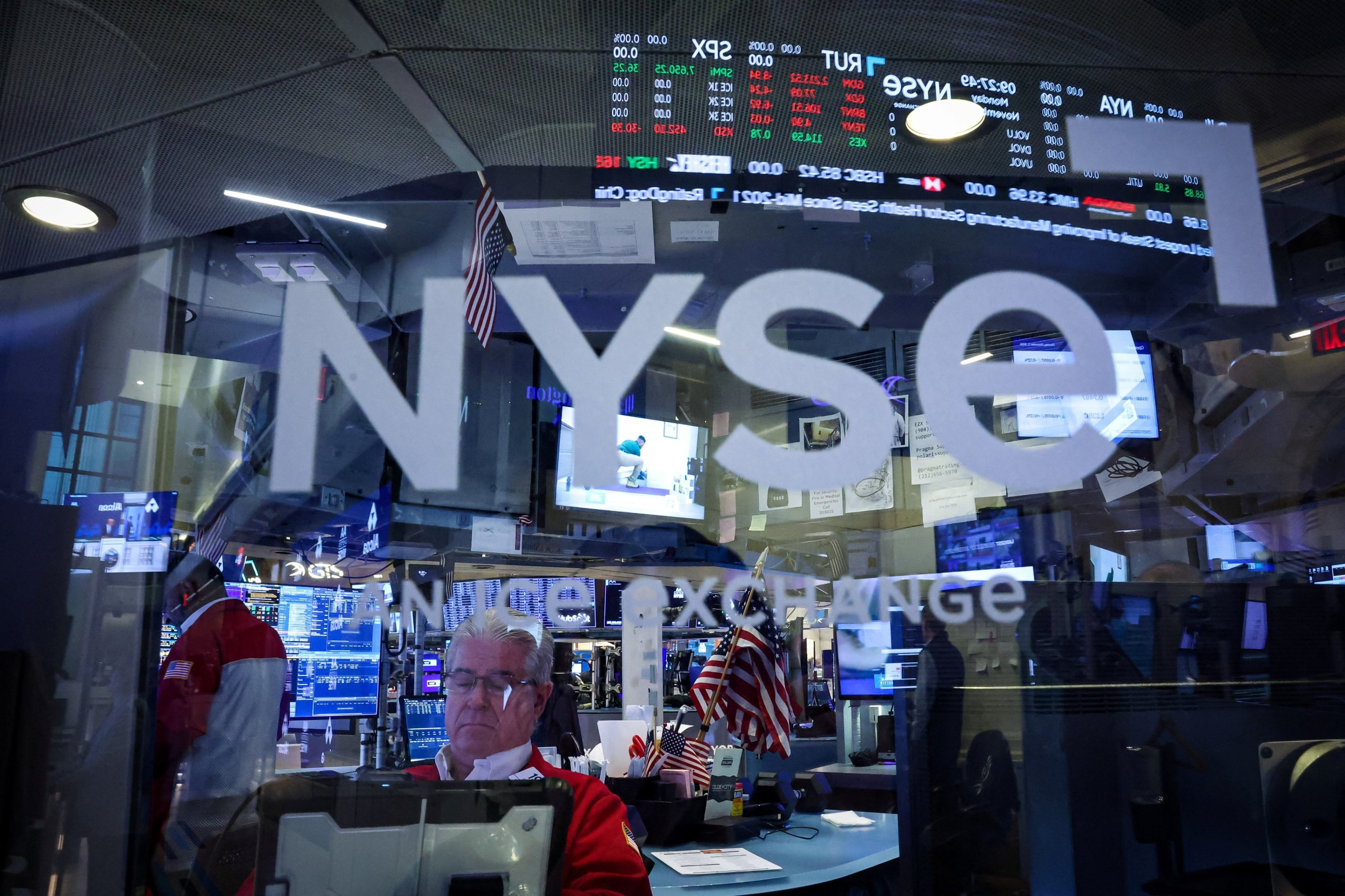
Global stocks recovered by midday on Wednesday from lows hit overnight, while the dollar weakened, after Democrats won control of both the Senate and the House in the U.S. midterm elections, which raised concerns that rapid AI sector growth could be hamstrung by regulatory scrutiny.
In a major setback to President Donald Trump, Democrats scored sweeping victories in Republican strongholds for the first time in generations.
"Democrats pulled off a double victory in the U.S. midterm elections that few saw coming at the onset of the year. The blue wave means the federal government is sure to be divided on most issues," Deborah Cunningham, chief investment officer, global liquidity markets at Federated Hermes, said.
Equities and the dollar sank initially amid warnings that the result – which saw Republicans ousted in a so-called blue wave – could lead to gridlock on Capitol Hill after Trump warned that he would become "Mr Veto."
Tech firms, already under pressure, were also hit by concerns about the future of data center building – a major bone of contention in many places.
Tens of millions of Americans cast their vote in the crucial polls pitched as a referendum on the White House amid anger at surging petrol prices, tariffs and the Iran war.
With Democrats winning key races to flip the House and Senate – including once-safe Republican seats – Chris Weston at Pepperstone flagged "the potential for legislative gridlock, fiscal brinkmanship, debt-ceiling disputes, and congressional investigations."
However, he added that "the president would retain considerable executive authority, so the implications for individual sectors are far from straightforward."
Trump threatened in a telephone interview with the CBS network on Tuesday to be "Mr Veto" and block any Democratic legislation if they win.
Later, he blamed the results on the Iran war and rising fuel prices.
The prospect of Congress coming to a standstill weighed on the dollar and Treasury yields, with observers pointing out that such a scenario would restrict spending.
"Democratic control of Congress will make it harder for the White House administration to pass major partisan legislation. That could reduce the prospect of significant additional fiscal stimulus over the next two years," wrote David Chao at Invesco.
AI stocks in Asia initially led the decline in equity markets, while bonds and safe-haven currencies such as the Swiss franc gained.
By the time the bulk of the midterm results had filtered through in the European day, equities had turned higher.
MSCI's All-World index was up 0.3%, while Europe's STOXX 600, which has acted as a hedge against AI-related risks, jumped 1.4% to two-month highs. U.S. stock futures also reversed course to rally around 1%, having fallen by as much as 2% overnight.
Shares in Elon Musk's Tesla and SpaceX, which he intends to merge, were down around 4.5% to 5% in premarket trading, compared with rises of 0.8% to nearly 3% for other Big Tech stocks.
"Overall, these results have had a mild impact on markets so far. Investors will move on from trading the uncertainty of the election results to trading the reality of what they mean for policy," XTB research director Kathleen Brooks said.
Traders were also nervous about the outlook for the AI buildout, with many Democrats taking advantage of anger over data center development.
"The concern isn't that a Democratic governor automatically shuts the gates on data-center construction," said Stephen Innes at SPI Asset Management.
"It is that a change in political leadership could alter the regulatory environment just as developers are committing enormous amounts of capital to projects dependent on electricity availability and predictable construction schedules."