'A Syrian Love Story': A documentary transformed with Syria's misfortunes
by Nagihan Haliloğlu
ISTANBULJan 30, 2016 - 12:00 am GMT+3
by Nagihan Haliloğlu
Jan 30, 2016 12:00 am
In the last few years, the Syrian civil war has been at the top of the agenda for many publications and artistic circles. British director Sean McAllister has documented the tragedy of a family fleeing from war, which has spoilt countless love stories
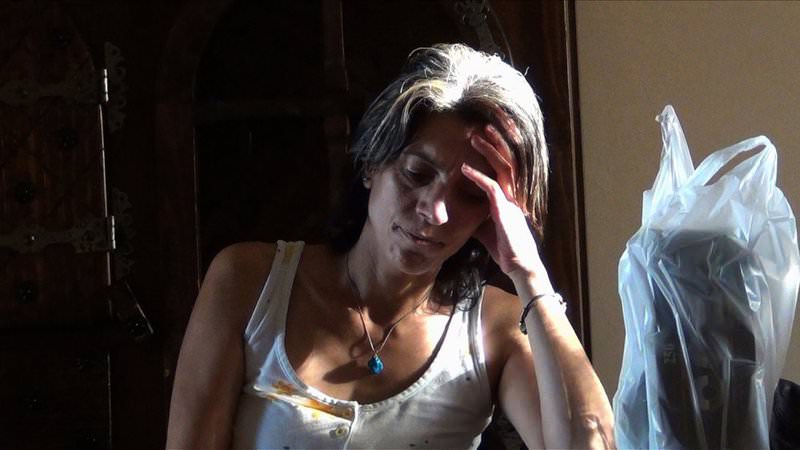
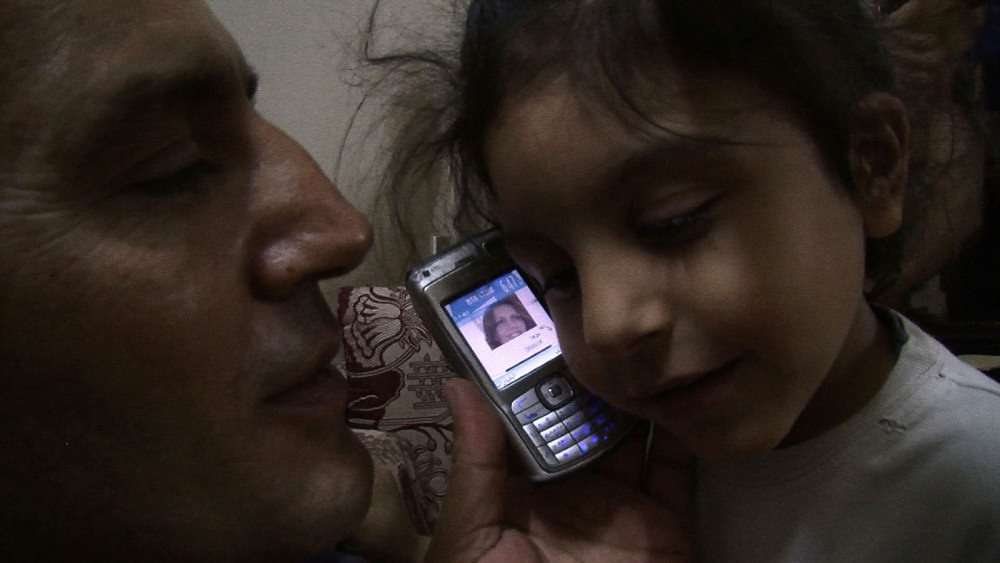
Last Thursday, the conflict reporters' association the Frontline Club held its first event in Istanbul in collaboration with Turkey's independent journalist association P24 where they screened Sean McAllister's documentary "A Syrian Love Story." Istanbul is especially appropriate to host such an event, as Raghda, the protagonist of the film, was flown from Gaziantep, where as we are informed towards the end of the film, she is acting as advisor to the Free Syrian National Council. "A Syrian Love Story" follows the fortunes of a Syrian-Palestinian family in Tartus. Raghda is an Alawi Syrian, and Amer a non-Muslim Palestinian. McAllister seems to have started the project to tell their incredible love-story which, as we are told, started when they were political prisoners in one of al-Assad's prisons. The couple met through a hole in the wall that connected their cells and Amer could see even through the hole that Raghda's face was bloated because of the beatings she had received from the hands of the police. They manage, through all odds, to build a family and bring up three beautiful sons. When later in the film one of the boys is retelling the story of their family, he says that throughout much of his childhood, one or the other of his parents were always in prison.
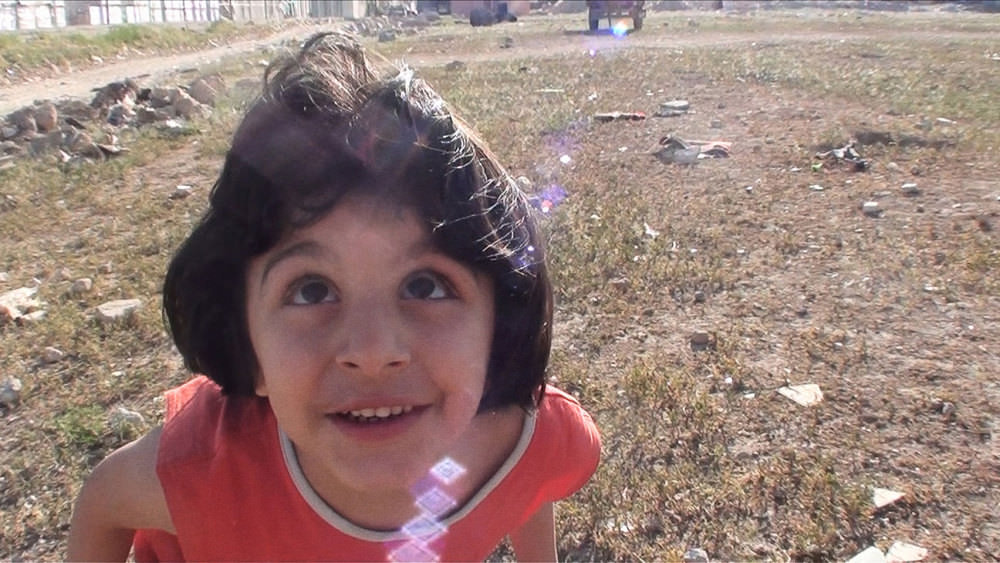
The story begins while Raghda is in prison for having written a book that criticizes Syrian President Bashar Assad, and we see Amer organize rallies for the release of political prisoners, rallies which slowly evolve into the revolution of 2011. Knowing what this hopeful movement will turn into, while seeing the excited faces of Raghda's family, is especially painful. Amer says he is hopeful, while his three sons with the youngest only three years old are very happy to be at the demonstrations. But then the police get very violent and the revolution starts to sour. One of the saddest parts of the narrative is about how they move to Yarmouk - a district of Damascus that was allocated to Palestinian refugees in 1957 - thinking there will be safer than Tartus. When one considers that there may come a time when the natives of a country may seek refuge in the very districts where the refugees have settled; refugees or not, have been happy to have in their country, this perspective throws life into shade. Sadder even when we as omniscient viewers consider that Yarmouk, where Raghda's family seeks refuge, would become the scene of one of the most horrific pictures of the war with a stream of people filling what now looks like a gorge flanked by buildings that have turned into standing sieves through incessant mortar shells.
In Lebanon, where the family flees from Yarmouk's destruction, Raghda is always on her computer, trying to connect with friends in Syria and try to help in the effort as much as she can. McAllister speaks with Amer who realizes, much to his despair, that her heart is still in her country and that she feels cut off from the really important work of the revolution. Here is where their love is tested, with Amer wanting to go to France and Raghda wanting to stay as close to Syria as possible. Amer tells McAllister that only if Raghda goes to the U.N. High Commissioner for Refugees (UNHCR) with them as a well-known dissident would the U.N. accept their asylum. Raghda disappears for a few days - to weigh the matter it seems - and next we see the family in Paris. The documentary is really about Raghda's resilient revolutionary spirit, which does not abandon her through her adventures through Tarsus, Yarmouk, Lebanon, Paris, Gaziantep and then Istanbul.
In the question and answer sessions she continues to exude energy, hope and determination. Raghda's story is critically necessary because she is an Alawi, to dispel any notion that al-Assad's regime has been good to those Alawi that wanted a minimum of accountability on the part of the state, and to portray those who struggle so that people of all faiths will be part of Syria's future.
A big part of the poignancy of the film comes from the fact that we know how things will develop. Even when the family is enjoying a moment of peace and happiness, superimposed on our minds are images we have seen of Syrian families torn apart, on the run, sleeping rough. There is a scene where three-year-old son Bob falls down and hurts himself, soon after his mother is released from prison. She tries to calm him, whispers endearments in his ear and then puts a bandage on his chin, and these small home accidents and worries take on an idyllic air when we think of the hundreds of thousands of children, some of whose images have entered our households -perhaps as we are trying to calm our own young ones - who have been subjected to violence beyond what a band aid can treat.
When the documentary finds the family in Paris, we see the children adapting to their new environment and switching easily between languages. They are all at school, an opportunity they did not have in Lebanon. As a measure of how well the boys have integrated, we see the oldest play boules, the traditional French lawn bowling game, in the park. In Paris, the tension between Raghda and her husband comes to a boiling point. McAllister is brilliant at making himself and his camera invisible to the family - in the question and answer Raghda says: "When I returned from prison we had an extra member of the family, and the camera was nothing much more than his eye," as he films the fights between Raghda and Amer. We witness the shrinking space of the refugee in their country of adoption, such that when she has said her last angry word and wants to leave the room, Raghda has to basically jump over Amer to get to the door.
Starting from Lebanon, Amer has moments where he complains to the camera/McAllister about Raghda's lack of affection for him and her family, and she does indeed talk about how something went dead inside her after her experiences in prison, and her following estrangement from her country. He starts an affair with another woman, which leads to Raghda's total collapse. In one of the most revealing scenes of the film, she says that everybody reflects their needs onto her and nobody asks her what it is that she herself may need by way of support. By this time we are aware that the 'love' in the title is not necessarily that between Raghda and Amer, but between Raghda and Syria, because although her family want her to let Syria go and to make a new life in France, she finds it impossible to abandon the struggle.
The last image we have of Raghda is in Gaziantep, looking much healthier and more hopeful than ever that she will both find out how it is she really feels inside and that she can help Syria out of its troubles.
In the question and answer that followed, after the usual inane "But how was it to be a revolutionary and a mother?" questions to Raghda which she dodged gracefully, there was one good question to McAllister as to whether he felt he had managed to steer away from the misery voyeurism that we seem all to engage in, especially in the context of the Syrian war. He answered that he had not started the project with a view of explaining the Syrian revolution, but with a view to telling a particular story, and had set about shooting the sort of film he'd make in the U.K., or anywhere else, about people in whom he was interested. And it is his interest in the particular and the personal that makes you feel you have gotten to know some extraordinary people through his film, a film whose story you want to pass on to others so that their struggle may inspire and hopefully encourage people into action.
Keep up to date with what’s happening in Turkey,
it’s region and the world.
You can unsubscribe at any time. By signing up you are agreeing to our Terms of Use and Privacy Policy.
This site is protected by reCAPTCHA and the Google Privacy Policy and Terms of Service apply.